


How Much Are Private Piano Lessons Per Hour?

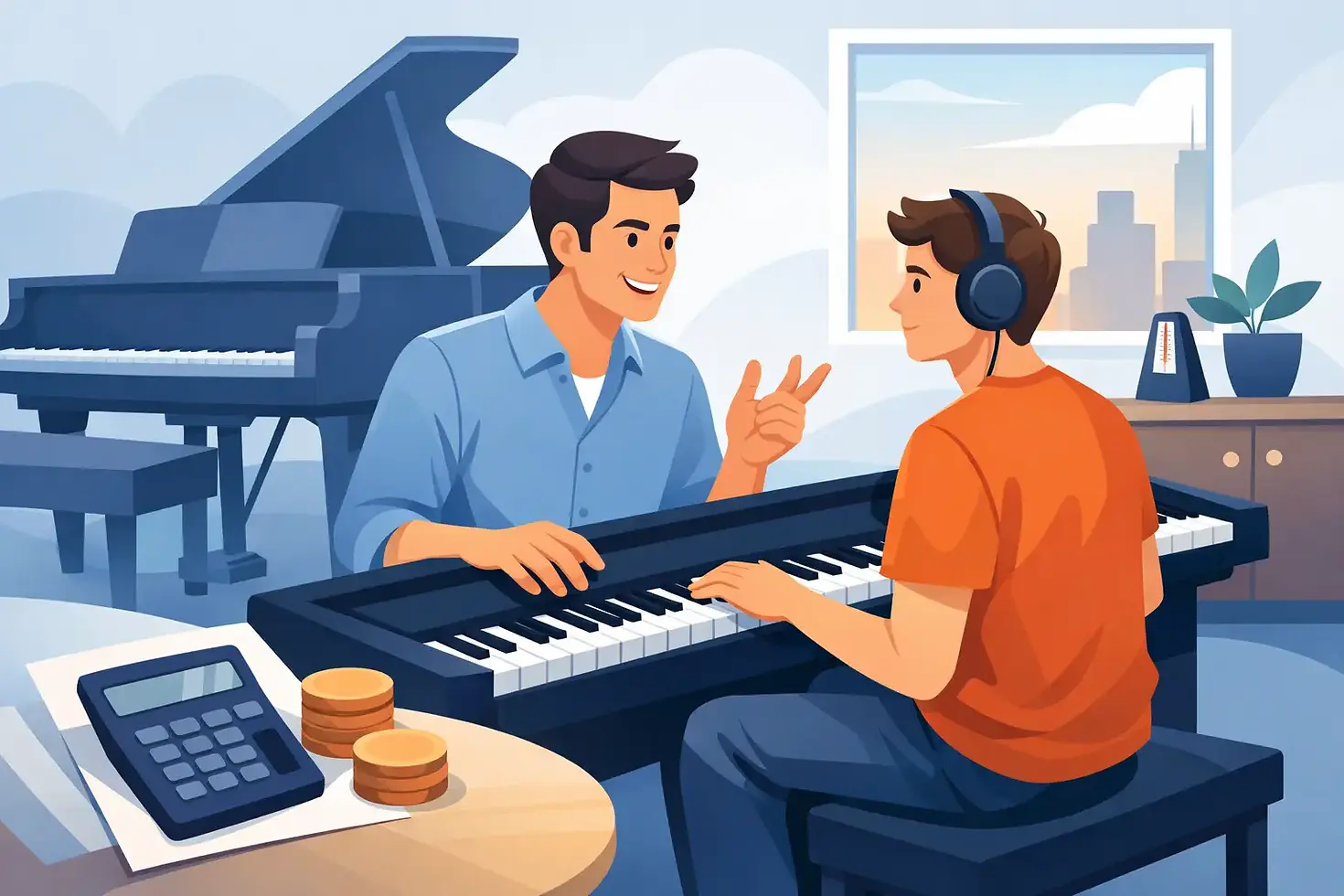
If you are asking how much are private piano lessons per hour, you are probably trying to do more than compare numbers. You are trying to work out what good teaching should cost, what fits your budget, and whether a higher fee actually means better progress. That is a sensible question, especially when lessons can range quite widely across the UK.
The short answer is that private piano lessons in the UK often cost between £25 and £70 per hour. In some cases, beginner teachers or students in training may charge less, while highly experienced specialists, concert performers, or London-based teachers may charge more. Most families and adult learners will find themselves somewhere in the middle of that range.
What matters most is not just the hourly fee, but what that fee includes. A well-structured lesson with personalised guidance, clear goals, and thoughtful feedback often gives far better value than a cheaper lesson with little direction.
How much are private piano lessons per hour in the UK?
For many students, an hourly rate of around £30 to £50 is a realistic starting point. That tends to cover a good number of qualified private teachers offering one-to-one tuition for children, teenagers, and adults. If the teacher has strong credentials, years of teaching experience, or specialist knowledge in areas such as jazz piano, classical performance, ABRSM, or TRINITY exam preparation, the fee may sit closer to £50 to £70 per hour.
Rates also depend on lesson length. Many younger beginners do not start with a full hour. A 30-minute lesson may cost around £15 to £35, and a 45-minute lesson may fall between £22 and £50. As students become more advanced, longer lessons usually make more sense because there is more to cover - technique, repertoire, theory, aural work, sight-reading, improvisation, and exam preparation all take time.
If you are comparing prices, always convert them to an hourly rate so you are looking at like for like. A 30-minute lesson at £20 may sound very different from an hour at £40, but in practice they are the same rate.
Why piano lesson prices vary so much
Two teachers can both offer private piano lessons and charge very different fees for perfectly valid reasons. Price is shaped by experience, expertise, location, format, and the type of student support being offered.
A teacher with formal music training, a strong record of student results, and real performance experience will usually charge more than someone at the beginning of their teaching career. That does not mean the more expensive teacher is automatically the right fit for everyone, but it does often mean you are paying for depth of knowledge, sharper diagnosis of problems, and a clearer plan for progression.
Location also affects cost. Teachers in London and other high-cost areas often charge more than those in smaller towns. Travel can be a factor too. If a teacher comes to your home, you may be paying not only for teaching time but also for travel, fuel, and scheduling constraints.
Then there is the style of teaching. A lesson focused simply on helping a pupil get through a few pieces may cost less than one built around broader musical development. If your lessons include technique, theory, musicianship, exam preparation, improvisation, and tailored practice planning, the price may be higher because the service is more complete.
What you are really paying for
When parents or adult learners look at fees, it is tempting to focus only on the hour in the room or on screen. In reality, good teaching extends beyond that.
You are paying for preparation, lesson planning, and the teacher’s ability to spot what is holding a student back. You are also paying for a progression path. A skilled teacher knows when to challenge, when to simplify, and how to keep a student moving without making lessons feel discouraging.
This is especially important for beginners. Early lessons shape posture, hand position, rhythm, reading, listening, and confidence. If those foundations are rushed or taught inconsistently, students often end up frustrated later. A higher-quality lesson at the start can save time and relearning down the line.
For intermediate and advanced players, value often comes from detail. That might mean polishing phrasing in a classical piece, building stronger harmonic understanding in jazz, or preparing carefully for an ABRSM or TRINITY exam. The more specific the guidance, the more each lesson tends to be worth.
Are online lessons cheaper than in-person lessons?
Sometimes, but not always. Virtual lessons can be slightly less expensive because there is no travel time and fewer overheads for the teacher. However, many experienced teachers charge the same rate online as they do in person, especially if the quality of instruction remains high.
That makes sense. A strong online lesson still requires planning, attention, clear demonstration, and personalised feedback. In some cases, virtual learning can even offer extra convenience that adds value for busy families and adults fitting music around work, school, or home life.
The main trade-off is practical. Online lessons work very well for many students, but they rely on a stable internet connection, a suitable instrument at home, and a setup where the teacher can see posture, hands, and keyboard clearly. For some learners, especially motivated adults and focused children with support at home, virtual lessons are an excellent option. Others may prefer the immediacy of in-person teaching.
How to tell if a lesson is worth the cost
A good piano lesson should feel purposeful. That does not mean it has to feel strict or intimidating. In fact, the best lessons are often warm, calm, and encouraging. But they should still lead somewhere.
If you are paying for private tuition, look for signs of structure. Is there a clear sense of what the student is working towards? Does the teacher explain what to practise and why? Are pieces and exercises chosen to match the student’s level and interests? Is there a balance between enjoyment and discipline?
The right teacher should also adapt. A child beginner needs a different approach from an adult returning to the piano after twenty years. A student aiming for jazz fluency needs different guidance from one preparing Grade 5. Personalised teaching is part of what justifies the cost.
At Dan Piano Studio, for example, the emphasis is not simply on filling a lesson slot. It is on one-to-one development across classical and jazz piano, supported by theory, structured guidance, and exam preparation where appropriate. That kind of individual attention tends to matter more than finding the absolute lowest rate.
Should beginners pay for a full hour?
Not always. For many young beginners, 30 minutes is plenty at first. Concentration is limited, and shorter lessons can be more effective if they are well taught and supported by regular practice at home. As the student grows in stamina and commitment, moving to 45 or 60 minutes often becomes worthwhile.
Adult beginners can sometimes benefit from a full hour sooner, especially if they want a more in-depth understanding of reading music, technique, and practice strategy. Even then, it depends on attention span, budget, and goals. A shorter lesson taken consistently may be better than an hour that feels financially or mentally hard to sustain.
Questions to ask before choosing a teacher
When comparing lesson rates, ask what the teaching actually looks like. Does the teacher work with complete beginners as well as more advanced students? Can they teach the style you want - classical, jazz, or both? Do they include theory and musicianship, or is it purely piece-based? Have they prepared students for exams or performances before?
It is also worth asking about consistency. Weekly lessons usually produce the best results because momentum matters in music. A slightly higher fee from a teacher who offers reliable structure, continuity, and clear guidance may serve you better than cheaper, irregular tuition.
Finally, think about rapport. Students progress best when they feel supported and understood. Piano study should be serious, but it should also feel approachable. That balance is not always easy to find, and it is one reason experienced, thoughtful teachers often charge what they do.
The real cost of choosing on price alone
Low-cost lessons can be a good option in some situations, particularly if budget is tight and the teacher is still capable, organised, and encouraging. But choosing only on price can lead to a stop-start experience. Lessons may lack structure, goals can stay vague, and progress may feel slower than it should.
That can become more expensive in the long run. Students lose confidence, parents feel unsure whether lessons are working, and adults often give up because they cannot see a clear path forward. Good teaching does cost money, but it should also create momentum, motivation, and measurable improvement.
If you are weighing up how much to spend, think less about the cheapest hourly figure and more about the kind of musical journey you want. A lesson is not just an hour of instruction. It is a chance to build skill, confidence, and enjoyment in a way that lasts.


Comments