


How many piano lessons do you need as a beginner?

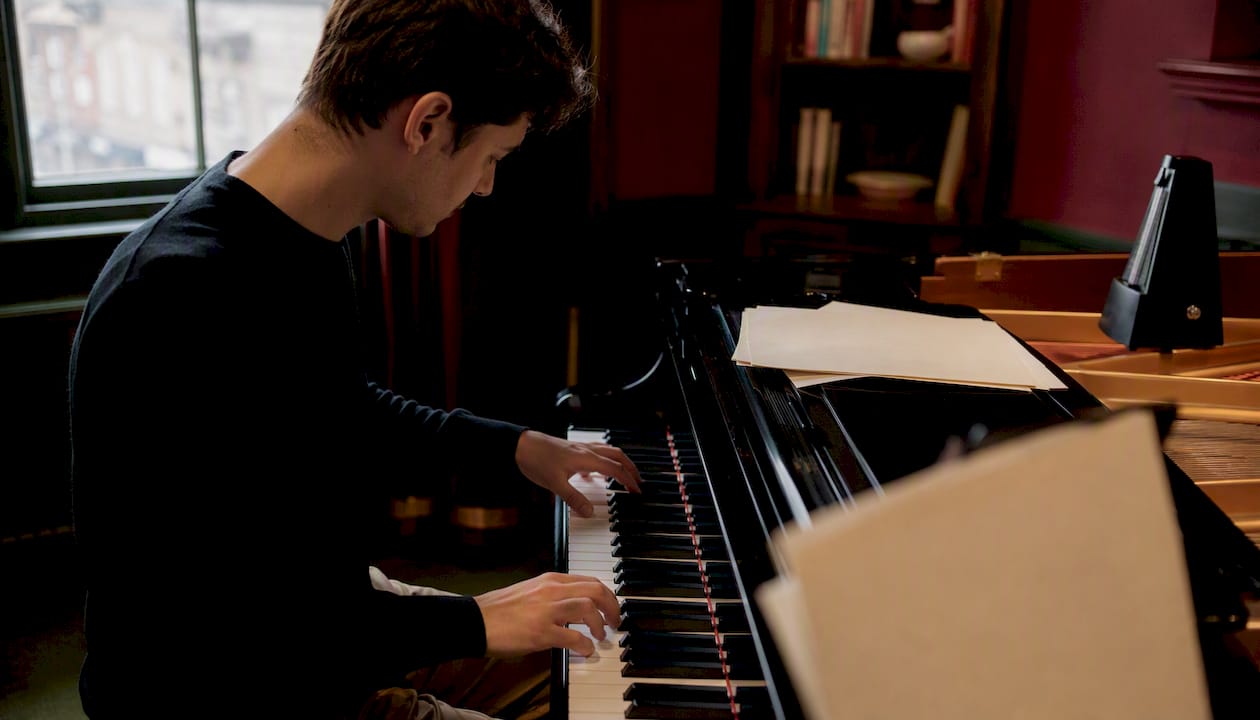
Most UK beginners reach basic playable proficiency after a number of weekly lessons in the range commonly reported by teachers, provided they practise consistently at home. That range shifts considerably depending on four things: how long each lesson is, how many minutes a day you practise, whether you have any prior musical experience, and whether you are working towards a formal exam such as an ABRSM or Trinity College London grade. Dan Piano Studio teachers see this pattern regularly: students who commit to daily practice between sessions move through early milestones noticeably faster than those who only play during the lesson itself.
The main variables that change your lesson count:
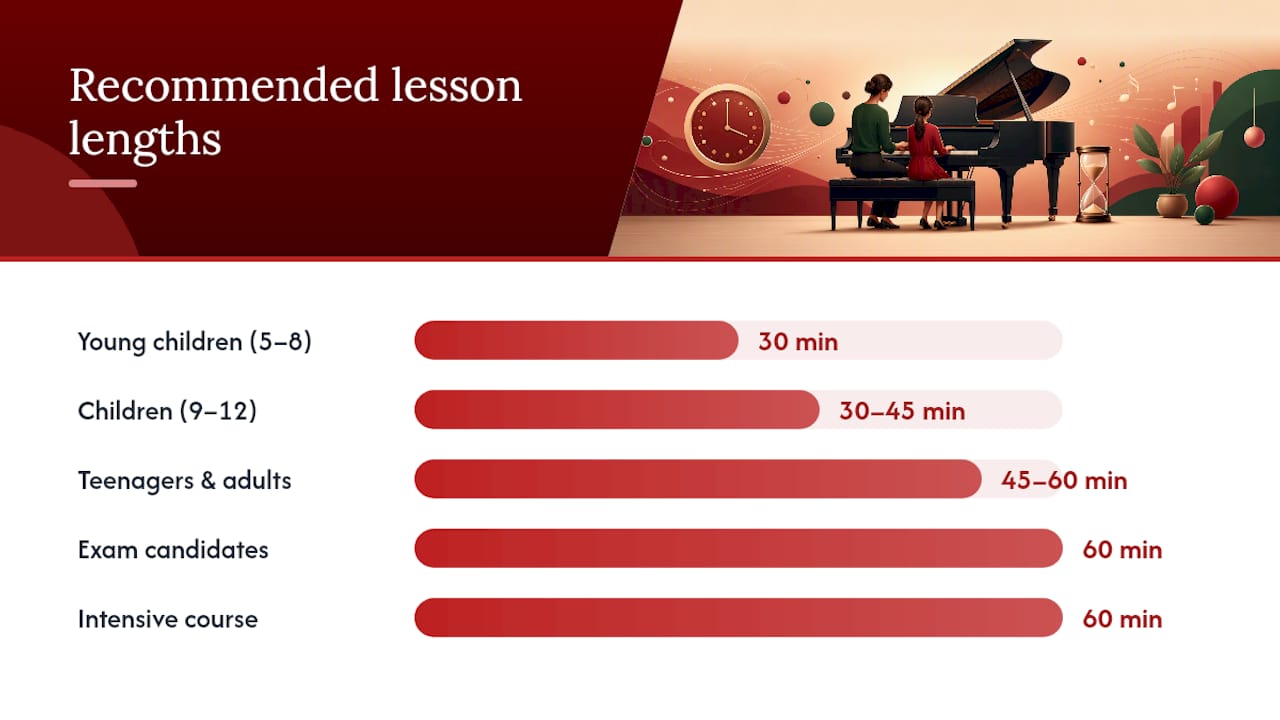
Lesson length: 30-minute sessions suit young children and absolute beginners; 45 or 60 minutes allow more material per session and reduce the total number of lessons needed.
Daily practice: 15 minutes a day produces slower but steady progress; 30–45 minutes a day is the sweet spot for most adult learners.
Prior experience: Any keyboard, guitar, or music-reading background can halve the early lesson count.
Age: Younger children often need more lessons to reach the same technical milestone, though they frequently retain material well over time.
Exam goals: Preparing for ABRSM Grade 1 or Trinity Initial Grade adds structure but also adds lessons. Typically, 6–12 months of weekly tuition from scratch.
Key takeaways
Most UK beginners reach basic playable proficiency after 10–30 weekly lessons, with daily practice of 30 minutes being the single most reliable accelerator of progress.
Point | Details |
Lesson count for beginners | Most beginners need a moderate number of weekly lessons to reach basic proficiency, depending on practice consistency. |
Daily practice target | Practising 30 minutes a day typically produces simple-song proficiency within 3–6 months. |
Lesson length and frequency | 45-minute weekly lessons suit most learners; 30 minutes works for young children with consistent home practice. |
Exam pathway planning | ABRSM or Trinity Grade 1 typically requires 20 lessons from scratch, plus focused exam preparation time. |
Danpianostudio | Offers tailored in-home, in-studio, and online lessons in Central London with ABRSM and Trinity exam support. |
Table of Contents
What can you realistically play after each stage?
Progress is not linear, but the milestones below reflect what a typical beginner achieves with weekly lessons and consistent home practice.
Lessons / Timeframe | Expected abilities |
1–5 lessons (Month 1) | Correct hand position, simple five-finger exercises, reading basic treble clef notes, playing a short melody hands separately |
6–12 lessons (Months 2–3) | Both clefs introduced, simple hands-together coordination, first short pieces (e.g. “Ode to Joy”, simple folk tunes) |
— | Comfortable hands-together playing, basic dynamics, simple scales, early ABRSM/Trinity Initial or Grade 1 repertoire |
30–60 lessons (Months 6–12) | Grade 1–2 standard pieces, sight-reading simple passages, basic chord accompaniments, growing musical expression |
— | Grade 3–5 repertoire, more complex rhythms, introduction to jazz or improvisation, confident performance pieces |
Private lessons generally move faster than group lessons at the early stages because the teacher can address your specific weaknesses immediately rather than pacing the group. That said, group versus private lessons each have genuine advantages depending on your goals and budget.
Many teachers and academies report that meaningful, visible progress typically appears after the first 10–12 weekly lessons for beginners who practise sensibly at home.
Pro Tip: In your first month, spend at least half your practice time on hands-separately work before combining them. Rushing to hands-together too early is the single most common reason early progress stalls.
How does lesson length and frequency affect your total lesson count?
Choosing the right lesson length
The three standard lesson lengths each suit different learners and goals.
30-minute lessons are the standard starting point for children aged 5–8 and absolute beginners of any age. The Gear4music blog confirms that 30-minute weekly lessons are sufficient for beginners when home practice is consistent. A teacher can introduce one new concept, review last week’s piece, and set clear practice tasks in half an hour. The catch: there is little room for theory, sight-reading, or technique work alongside repertoire, so progress can feel slower.
45-minute lessons hit the practical sweet spot for most learners aged 9 and above. There is enough time for a warm-up, technique, one or two pieces, and a theory or ear-training element. Many adult beginners find this length more satisfying because a lesson feels complete rather than cut short.
60-minute lessons suit motivated teens, adults with specific goals (exam preparation, jazz, improvisation), and anyone who wants to cover classical repertoire alongside theory and sight-reading in a single session. The trade-off is cost and concentration: a full hour demands genuine focus, and a tired or distracted student gets less from the extra 15 minutes than they might expect.
Once a week or twice a week?
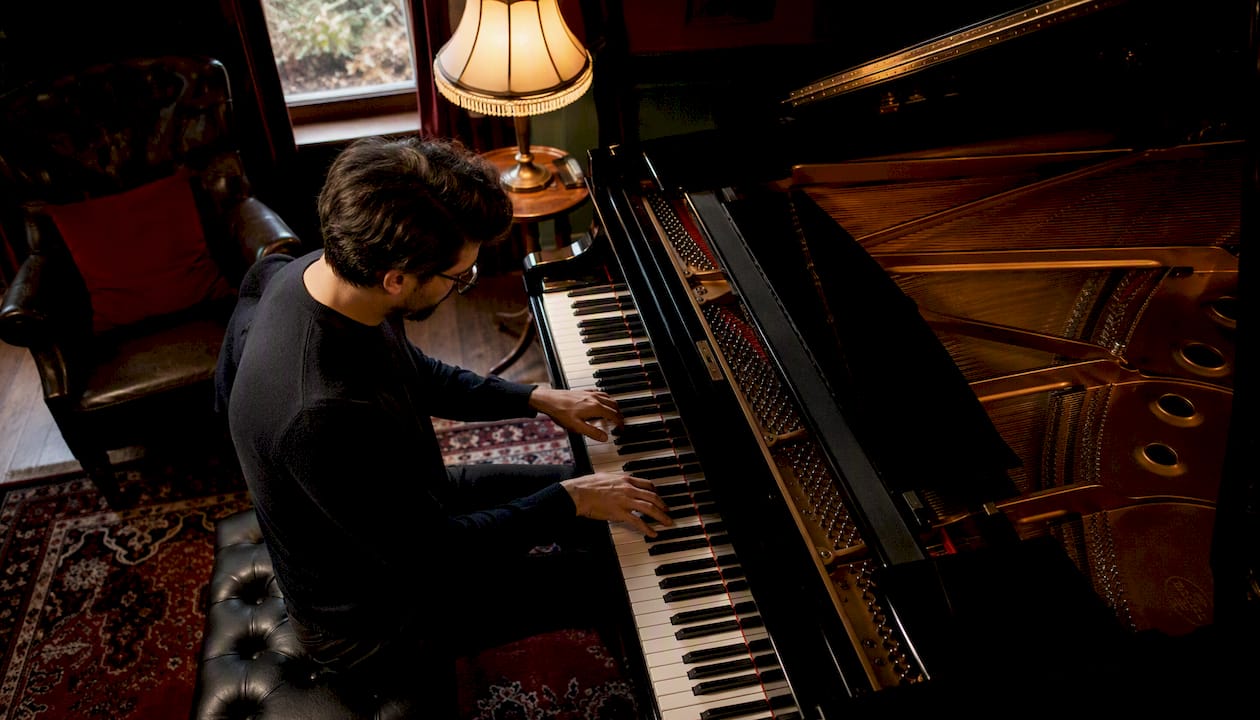
Once a week is the standard because it gives you time to absorb new material, practise it, and arrive at the next lesson having genuinely processed what you learned. Twice-weekly lessons speed progress but cost more and work best for motivated learners or exam candidates on a tight timeline. Weekly lessons are the default for good reason: the gap between sessions is where most of the real learning happens.
Learner type | Recommended length | Recommended frequency |
Young children (5–8) | 30 minutes | Once weekly |
Children (9–12) | 30–45 minutes | Once weekly |
Teenagers | 45–60 minutes | Once weekly (twice for exams) |
Adult beginners | 45–60 minutes | Once weekly |
Exam candidates | 60 minutes | Once or twice weekly |
Intensive / short course | 60 minutes | Twice weekly or more |
How to practise between lessons to cut your total lesson count
Practice quality matters more than practice length, but length still matters. These are the daily targets that produce reliable results:
15 minutes a day: Slow but steady. Expect 6–12 months to play simple songs comfortably.
30 minutes a day: A realistic target for most adult learners. Simple songs in roughly 3–6 months; early intermediate pieces within a year.
45 minutes a day: The target Gear4music recommends for steady beginner progress. At this level, you are likely to reach Grade 1 standard within 6–9 months of starting.
60+ minutes a day: Accelerates progress considerably. Early intermediate repertoire within 2–4 months for a focused learner.
A simple four-week practice structure
Use this as a starting template and adjust it with your teacher:
Week 1: Hands-separately work on the new piece; scales or five-finger exercise (5 minutes); review previous piece (5 minutes).
Week 2: Introduce hands-together on the easiest section; continue scales; short sight-reading exercise.
Week 3: Hands-together on the full piece at slow tempo; add dynamics; record yourself once to hear what the teacher hears.
Week 4: Performance run-throughs; focus on the one bar that still trips you up; prepare questions for your next lesson.
Pro Tip: Use a metronome from day one, not as a punishment for rushing but as a tool for building even tone. Slow, accurate repetition builds muscle memory faster than fast, messy repetition.
Practice and milestones: Practising 30 minutes a day typically produces simple-song proficiency in 3–6 months; 15 minutes a day extends that to 6–12 months.
What factors speed up or slow down your progress?
Two learners can take the same number of piano lessons and be at completely different places after six months. Here is why, and what you can do about the factors you control.
Age plays a genuine role, though not always in the way people expect. Young children (5–8) often need more lessons to reach a given technical milestone because their hands are still developing and their concentration spans are shorter. Teenagers and adults typically progress faster in the early stages because they can process instructions analytically and practise more independently.
Prior musical experience is probably the single biggest accelerator. A guitarist who already reads music and understands rhythm can reach Grade 1 standard in half the lessons a complete beginner needs. Even singing in a choir or playing recorder at school gives you a head start on rhythm and note-reading.
Practice quality separates learners more than almost anything else. Mindless repetition of a piece from start to finish is far less effective than targeted work on the specific bar that keeps going wrong. Deliberate practice, chunking difficult passages, and slow work with a metronome produce faster gains per minute than casual run-throughs.
Teacher skill and fit affect not just what you learn but how efficiently you learn it. A teacher who gives clear, specific practice tasks and adjusts the difficulty curve to your pace will get you to milestones faster than one who simply assigns pieces and waits.
Goal specificity is underestimated. Learners who say “I want to play Für Elise by Christmas” make faster progress than those who say “I want to get better at piano.” A concrete target shapes every practice session.
Motivation and consistency are the long game. Missing two weeks of practice after a holiday or a busy period at work can set you back a month of progress. Short, frequent sessions beat occasional long ones every time.
For more on starting piano lessons and progressing well, the practical steps matter as much as the lesson count.
How do ABRSM and Trinity grades map to lesson counts?
The two main UK exam routes are ABRSM and Trinity College London. Both use a graded system from Initial/Prep Test through to Grade 8, and both are widely recognised by schools, universities, and conservatoires. ABRSM grades are the more commonly referenced benchmark in England.
The table below gives approximate timelines for a consistent student taking weekly lessons and practising 30 minutes a day. Individual variation is significant: a motivated adult with prior music experience might move through Grade 1 in three months; a young child with limited practice time might take 18 months.
Grade | Approximate lessons | Approximate timeframe |
Initial / Prep Test | 10–20 lessons | 3–6 months from scratch |
Grade 1 | 20 lessons | 6–12 months from scratch |
Grade 2 | 40 lessons | 12–18 months from scratch |
Grade 3 | 60 lessons | 18 months from scratch |
Grade 4–5 | 90 lessons | 2–4 years from scratch |
Grade 6–8 | 150 lessons | 4–10+ years from scratch |
Key caveats worth keeping in mind:
Exam preparation typically adds 6–12 weeks of focused lesson time on top of regular progress, as repertoire, scales, sight-reading, and aural tests all need specific attention.
Trinity College London syllabuses offer slightly different repertoire choices and can suit learners who prefer a broader or more contemporary range of pieces.
Skipping grades is possible and sometimes advisable; not every learner needs to sit every grade.
A student who practises 45–60 minutes daily will move through these timelines noticeably faster.
What do piano lessons cost in the UK?
Lesson prices vary by region, teacher experience, and lesson length. London rates sit at the higher end of the national range, reflecting the cost of living and the concentration of highly qualified teachers.
Lesson length | Typical UK price (outside London) | Typical London price |
30 minutes | £20 | £30 |
45 minutes | £30–£45 | £40 |
60 minutes | £40 | £55 |
The Musicians’ Union provides guidance on professional pay standards for UK music teachers, which gives a useful reference point when evaluating whether a quoted rate reflects genuine professional experience. A higher price does not automatically mean a better teacher, but very low rates (below £15 for a 30-minute lesson) can indicate a lack of formal qualifications or experience.
For a detailed breakdown of hourly rates in London, the Danpianostudio pricing guide covers what to expect and what drives the variation.
Practical budgeting tips:
Trial lessons: Most professional teachers offer a first trial lesson, sometimes at a reduced rate. Use it to assess teaching style and communication before committing.
Lesson packs: Buying a block of lessons (typically 5 or 10) often reduces the per-lesson cost and helps both teacher and student commit to a schedule.
Online lessons: Generally 10–20% cheaper than in-person sessions and eliminate travel time, making them a practical option for adult learners with busy schedules.
Pro Tip: Ask any prospective teacher whether they hold a DBS check before booking lessons for a child. A professional teacher will have one readily available and will not hesitate to share it.
What should you ask before booking a teacher?
Booking checklist
Before committing to a teacher or studio, check the following:
Qualifications: Do they hold a formal music degree, ABRSM diploma, or equivalent teaching qualification?
Exam experience: Have they prepared students for ABRSM or Trinity grades, and at what levels?
Repertoire breadth: Can they teach classical, jazz, or contemporary styles depending on your goals?
Safeguarding: For children’s lessons, do they hold a current DBS check?
Trial lesson policy: Do they offer a trial lesson before you commit to a block?
Cancellation policy: What happens if you need to cancel at short notice?
Practice guidance: Do they provide written practice tasks after each lesson?
Questions to ask at your first lesson
What are your expectations for home practice, and how many minutes per day do you recommend for my level?
How will you track my progress, and how often will we review my goals?
Which exam board do you recommend for my aims, and why?
How do you structure a typical lesson at my stage?
What repertoire will we cover in the first three months?
Red flags to watch for
No clear practice plan given after lessons; you leave unsure what to work on.
Avoidance of music reading in favour of playing entirely by ear or from tabs, unless that is explicitly your goal.
No safeguarding documentation for children’s lessons.
Reluctance to discuss exam pathways or progress milestones.
Lessons that feel unstructured or that repeat the same material week after week without progression.
What to expect from Danpianostudio
Danpianostudio offers tailored piano lessons in Central London (Camden and King’s Cross) and online, for children, adults, beginners, and advanced pianists. The studio covers classical piano, jazz, improvisation, music theory, and exam preparation for both ABRSM and Trinity College London.
A new student’s first 6–12 lessons at Danpianostudio typically follow this sequence:
Lessons 1–2: Posture, hand position, basic note reading, and a first simple melody.
Lessons 3–6: Both clefs, five-finger exercises, first short piece hands-together, introduction to basic rhythm values.
Lessons 7–12: First complete piece, introduction to dynamics and phrasing, scales in one or two keys, discussion of exam or goal pathway.
What sets the studio apart is the combination of structured progression and genuine flexibility. Whether a student wants to prepare for Grade 1 ABRSM, learn jazz improvisation, or simply play a favourite song, lessons are shaped around that goal rather than a fixed syllabus.
Lessons available in-studio, at home (Central London), and online.
ABRSM and Trinity exam preparation at all levels.
Classical, jazz, and improvisation covered within the same teaching relationship.
Friendly, focused environment suited to both children and adults.
Pro Tip: If you are an adult returning to piano after a gap of years, mention it at your first lesson. A good teacher will adjust the early lesson plan to rebuild technique efficiently rather than treating you as a complete beginner.
The part most guides get wrong about lesson counts
The question “how many piano lessons do I need?” is really two questions dressed as one. The first is about time: how many weeks or months until I can play something I am proud of? The second is about effort: how much of that progress comes from lessons versus practice?
Most guides answer the first question and ignore the second. The honest answer is that lessons are the map, but practice is the journey. A student who takes 60 lessons over two years but practises sporadically will often be outpaced by someone who takes 30 lessons over six months and practises 30 minutes every day. The lesson count is almost the wrong metric.
What actually predicts progress is the ratio of quality practice hours to lesson hours. Lessons should be the place where you get corrections, new material, and a clear direction. Practice is where those corrections become habit. When that ratio is healthy, even 30-minute weekly lessons produce real, audible progress within a few months.
The other thing guides understate is the role of enjoyment. Students who are playing music they genuinely like practise more, retain more, and stay with lessons longer. A teacher who insists on a rigid syllabus at the expense of a student’s musical interests is optimising for the wrong thing. The best lesson count is the one that keeps you coming back.
Piano lessons at Danpianostudio: in-person and online
Danpianostudio offers something most London studios do not: the choice between in-home lessons across Central London and online piano lessons with the same teacher, the same structured approach, and the same exam preparation quality. There is no fixed syllabus you have to follow and no long-term contract to sign before you know whether the teaching style suits you.
Lessons are available for children and adults, beginners through to advanced level, covering classical, jazz, improvisation, and ABRSM and Trinity exam preparation. Flexible lesson packs mean you can start with a trial lesson, assess the fit, and build from there. For families in Camden or King’s Cross, in-home lessons remove the logistics of travel entirely.
To book a trial lesson or ask about availability, visit Danpianostudio and get in touch directly.
Sources
These are the primary sources used in this article. Each is worth bookmarking if you want to verify exam requirements, pricing norms, or safeguarding expectations.
Recommended



Comments