


A Practical Guide to Classical Piano Technique

The first note of a piece can tell you a great deal about a pianist’s technique. Is the sound harsh or singing? Does the hand look tense, or does it move with purpose? A good guide to classical piano technique is not about making every movement look identical. It is about learning how your body, ears and musical imagination work together so that playing feels freer, more reliable and more expressive.
For beginners, technique creates the habits that make future progress easier. For developing players, it solves common frustrations: uneven scales, tiring hands, weak fingers or a melody that disappears beneath the accompaniment. For students preparing ABRSM or Trinity exams, it provides the control needed to present scales, arpeggios and repertoire with confidence.
Start with posture that supports movement
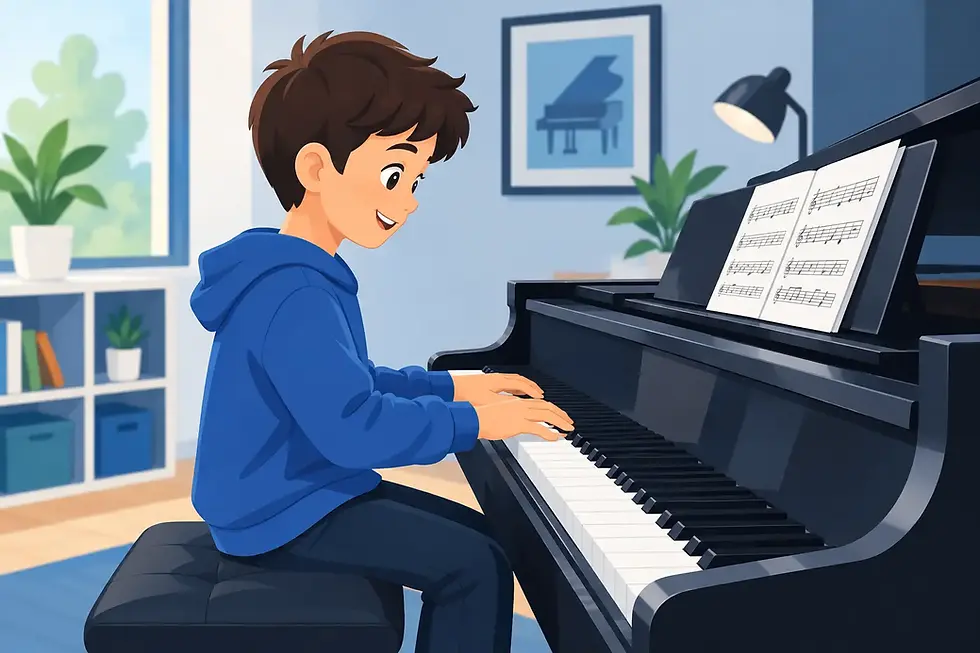
Classical technique begins before a key is pressed. Sit towards the front half of the piano stool, with both feet grounded and your forearms roughly level with the keyboard. Your shoulders should feel released rather than pulled back rigidly. The aim is balance, not a fixed pose.
Let your arms hang naturally by your sides for a moment, then bring your hands to the keys. Notice the gentle curve of the fingers and the space in the palm. Avoid collapsed fingertips, but do not force an exaggerated arch either. A comfortable, rounded hand gives each finger a better chance of transferring weight into the key.
Stool height matters more than many students expect. If you sit too low, the wrists often drop and the shoulders tighten. If you sit too high, you may feel as though you are pressing down from above without support. Small adjustments can make scales feel immediately less awkward.
Keep the wrist alive
A relaxed wrist is not a floppy wrist. It should be responsive enough to move slightly as the hand travels, shapes a phrase or releases a chord. Holding it completely still can create tension, particularly in faster passages.
Try playing five slow notes with one hand, listening for an even sound. Let the wrist follow the fingers by a very small amount. The movement should be subtle, but it helps the hand remain connected to the arm. If discomfort appears, stop and reset rather than trying to practise through it.
Tone comes from listening, not force
The piano only has one basic way to produce sound: a hammer strikes a string. Yet pianists can create an extraordinary range of colours through the speed, weight and timing of each key stroke. Pressing harder after the key has reached the bottom will not make the sound louder. The quality of the attack is what matters.
To develop a warm tone, begin with slow single notes. Use the weight of the arm, supported by a stable finger, and listen until the sound has fully settled. Then play the same note softly, without losing its centre. This is more valuable than repeatedly playing loud notes in the hope of building strength.
Think of the fingers as skilled points of contact rather than independent hammers. The larger arm supports the sound; the hand and fingers direct it. This approach is especially useful for younger students, who can otherwise become tense by trying to make a big sound with very small muscles.
Bring out the melody
In classical repertoire, the melody usually needs more presence than the accompaniment. This is a technical skill as well as a musical one. Practise the right-hand melody alone, singing the phrase quietly if that helps you hear where it is moving. Then add the accompaniment at a deliberately softer level.
Sometimes the melody and accompaniment are in the same hand. In that case, hold the melodic notes slightly longer and play the supporting notes with a lighter touch. It takes patience, but this is how simple pieces begin to sound shaped rather than merely correct.
A guide to classical piano technique for finger control
Finger control is often misunderstood as finger strength. Pianists do need active fingers, particularly for clear articulation, but power does not come from lifting each finger as high as possible. Excessive lifting can make the hand tense and the rhythm uneven.
Instead, practise close to the keys. Play five-finger patterns slowly, keeping the unused fingers relaxed. Aim for equal volume and steady rhythm, then change the dynamics: mezzo piano, mezzo forte, crescendo and diminuendo. Your ear should lead the exercise. If one note jumps out, do not simply repeat faster. Slow down and find out whether the finger, wrist or arm is interfering.
Czerny-style exercises and short technical studies can be helpful when they address a real need. They are less useful when played mindlessly for long stretches. A short, focused exercise with a clear aim often produces more progress than twenty minutes of automatic repetition.
Scales and arpeggios build practical fluency
Scales are not a box to tick before an exam. They teach hand position, thumb movement, evenness, key awareness and coordination. Arpeggios add the challenge of travelling across a wider area of the keyboard while maintaining a calm hand shape.
Begin slowly enough that every note feels prepared. For scales, the thumb should pass under the hand smoothly, while the hand moves slightly sideways to make room. Avoid twisting the wrist or forcing the thumb forward too early. In arpeggios, allow the arm to guide the hand across the keyboard rather than stretching the fingers beyond their natural reach.
Use a metronome carefully. It can reveal uneven rhythm, but it should not pressure you into playing faster than you can control. Start at a tempo where the notes are even and the shoulders remain free. Increase by small steps only when that quality is secure.
For exam preparation, practise technical work in a range of ways: hands separately, hands together, different rhythms, varied dynamics and starting from different points. This reduces the risk of relying on one memorised physical pattern. It also makes a scale feel like a musical skill rather than a test-room routine.
Pedalling should clarify, not conceal
The sustaining pedal can transform the sound of a piano, but too much pedal quickly blurs harmony and rhythm. A useful first habit is to play a passage without pedal until the fingers can connect it clearly. Add pedal afterwards to enrich the sound, not to cover gaps.
In much classical music, the pedal changes with the harmony. Press the pedal just after playing a new harmony, then release and replace it as the next harmony arrives. This creates a clean overlap rather than a sudden break. The exact timing depends on the instrument, the acoustic and the style of the piece.
Listen particularly carefully in fast passages and low-register chords, where sound can build up quickly. What feels generous under the foot may sound muddy to someone sitting a few feet away.
Practise technique inside real music
Technique becomes meaningful when it serves the piece. If a left-hand accompaniment is uneven, isolate the pattern and practise it quietly. If a leap causes missed notes, map the distance without sounding the keys, then return to the passage at a calm tempo. If a phrase feels breathless, decide where the musical line needs space and release tension before that point.
A thoughtful practice session might include a few minutes of warm-up, one technical focus, slow work on difficult passages and a final play-through for enjoyment. The balance will vary. A complete beginner may need more time learning notes and rhythm, while an advanced student may spend longer refining tone, voicing and stylistic detail.
Recording yourself occasionally is one of the clearest ways to hear progress. You may notice that a passage is more rushed, louder or less connected than it felt while playing. Treat this as useful information, not criticism. Music improves through attentive listening.
When personal guidance makes the difference
Online videos and books can offer useful ideas, but they cannot always spot a raised shoulder, a locked wrist or a thumb movement that is causing strain. Individual lessons make it possible to shape technique around the student, their repertoire and their goals. At Dan Piano Studio, this can include classical technique alongside theory, jazz skills or structured preparation for graded exams.
The most effective technique is rarely dramatic. It is the quiet confidence of sitting well, hearing clearly, moving efficiently and knowing how to solve a problem one small step at a time. Give each practice session one technical intention, and let the sound tell you whether it is working.


Comments