


Wedding ceremony piano music: a student's guide

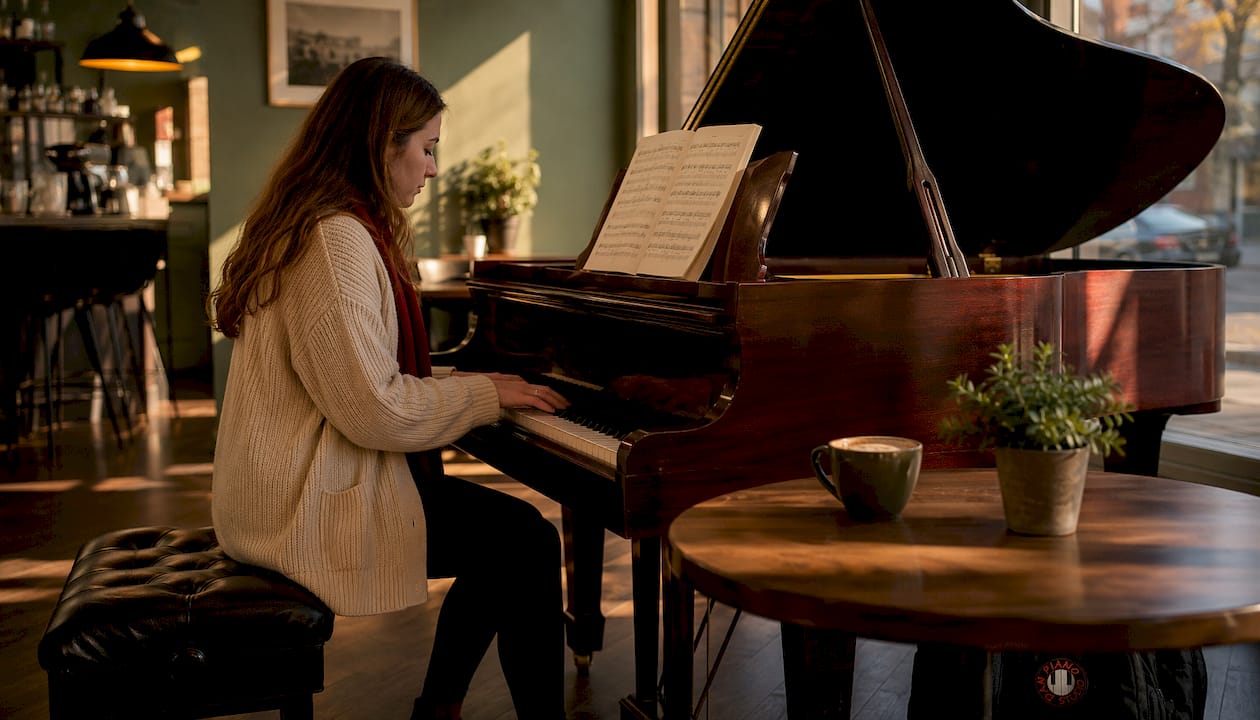
Wedding ceremony piano music is a curated selection of pieces chosen to accompany the distinct moments of a wedding, from the first guests arriving to the couple walking back down the aisle. For piano students, it represents one of the most rewarding repertoire goals you can set yourself: music that must work alone, without a band or orchestra, and carry real emotional weight in a room full of people.
A ceremony typically requires four to six pieces, each matched to a specific stage:
Prelude — background music as guests are seated, usually gentle and unhurried
Processional — the entrance of the wedding party and bride or groom, often the most recognisable moment
Register signing — a quieter interlude, sometimes a single lyrical piece
Recessional — the joyful exit, usually brighter and more energetic than anything before it
A complete ceremony needs four to six pieces covering prelude, processional, register signing, and recessional. Pachelbel’s Canon in D and Mendelssohn’s Wedding March remain the most widely recognised choices for processional and recessional respectively, and both sit within reach of intermediate students. Repertoire variety matters too, because not every student starts at the same level, and a good teacher will help you find pieces that challenge without overwhelming.
Table of Contents
What styles of wedding piano music suit different learners?
The four main genres you will encounter in wedding repertoire are classical, romantic contemporary, modern instrumental, and jazz. Each makes different technical demands and suits different ceremony contexts.
Classical pieces such as Bach’s Air on the G String, Debussy’s Clair de Lune, and Satie’s Gymnopédie No. 1 suit formal or traditional venues, particularly churches with natural reverb. Acoustically, an echoey space rewards slower, more sustained playing, and these pieces are written for exactly that. For students, classical repertoire also builds the foundational technique that underpins everything else.
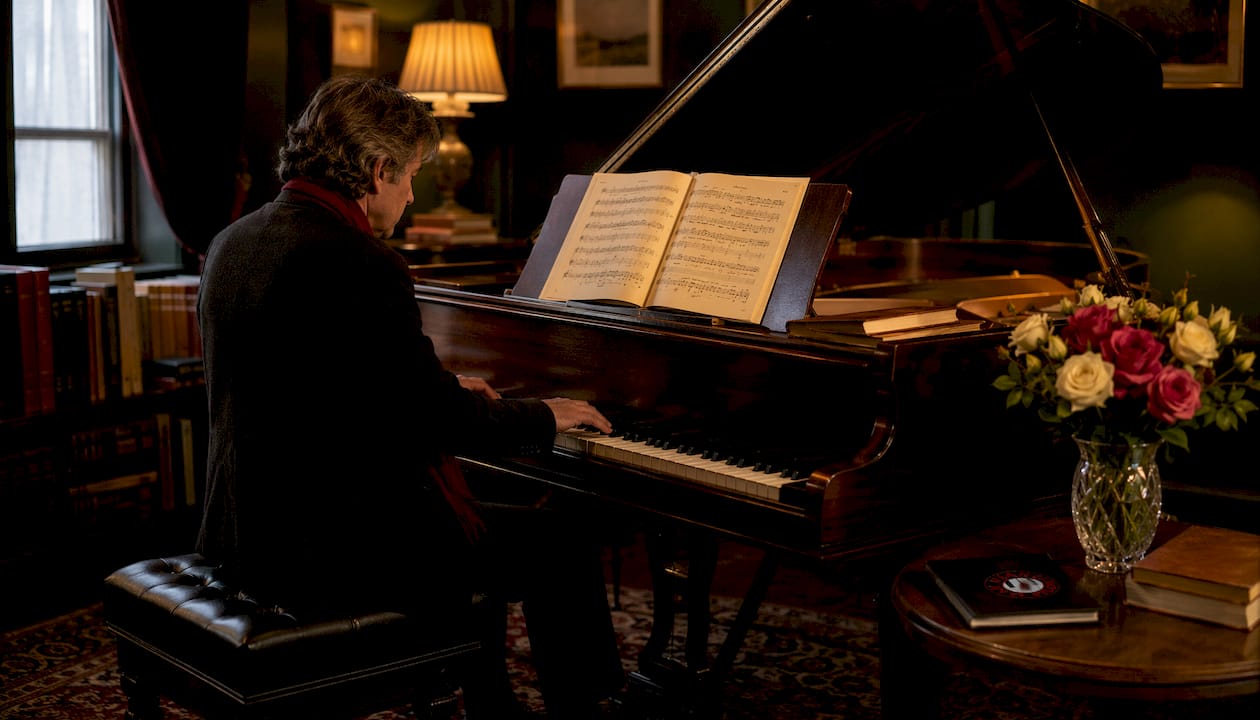
Romantic and popular contemporary pieces cover a broad range. Yiruma’s River Flows in You is a very popular modern wedding piece and remains one of the most requested modern wedding pieces. Christina Perri’s A Thousand Years, Ludovico Einaudi’s Nuvole Bianche, and Ed Sheeran’s Perfect in solo piano arrangement all sit in this category. They tend to be more harmonically straightforward than classical works, which makes them accessible to intermediate learners, though phrasing and dynamics still require careful attention.
Modern instrumental covers, including film scores and cinematic pieces by composers such as Max Richter and Hans Zimmer, are growing in popularity for contemporary secular venues. They often have a more dramatic arc, which suits the processional well.
Jazz interpretations, drawing on standards like Duke Ellington’s In a Sentimental Mood or Bill Evans’ Waltz for Debby, work best during the drinks reception or wedding breakfast rather than the ceremony itself. They require comfort with chord voicings and improvisation, making them a more advanced goal, but a genuinely distinctive one.
Venue acoustics shape the choice more than most students expect. A contemporary secular venue with carpeted floors and low ceilings suits pop covers and cinematic pieces; a stone church demands something with more sustain and less rhythmic complexity.
How do you choose the right piano lessons for wedding preparation?
The teacher matters as much as the repertoire. When you are preparing to perform at a wedding, you need someone who understands both the technical demands of the pieces and the practical realities of live performance under pressure.
Look for lessons that cover:
Classical technique — tone production, pedalling, and phrasing are non-negotiable for most ceremony pieces
Jazz and improvisation — useful if you want flexibility in the reception or cocktail hour
Music theory — understanding harmony helps you adapt arrangements and transpose when needed
Exam preparation — ABRSM and Trinity syllabi include pieces that overlap significantly with wedding repertoire, and the discipline of exam preparation builds performance confidence
The in-person versus online question depends on your learning style and schedule. In-person lessons allow a teacher to correct posture and touch directly; online piano lessons offer flexibility that suits working adults preparing around a busy diary.
On timing: a complete beginner needs roughly two to three years to reach the standard required for most ceremony pieces. An intermediate player, around ABRSM Grade 4–5, can typically prepare a full ceremony programme in three to six months with focused practice.
Pro Tip: Before committing to a piece, play through a solo piano arrangement rather than listening to the orchestral original. Some pieces that sound magnificent with strings lose their shape entirely when stripped back to piano alone. Audition the solo version first.
A good teacher will also help you manage performance duration. Most ceremony pieces run two to four minutes, and you may need to loop or extend a prelude if guests are still arriving. Knowing how to handle that gracefully is a skill in itself.
Which London piano lesson providers prepare students for wedding repertoire?
Provider | Location | Lesson types | Credentials and experience | Wedding music focus | Student levels | Formats | Pricing indication |
Central London (Camden, King’s Cross) | Classical, jazz, improvisation, music theory, ABRSM and Trinity exam prep | Formally qualified; extensive teaching experience with children and adults | Tailored wedding repertoire across classical and contemporary styles | All levels, beginners to advanced | In-person and online | Not publicly listed | |
North West UK | Live performance for ceremonies, drinks receptions, wedding breakfasts | Professional performer with numerous positive Google reviews | Ceremony and reception performance specialist | Performer, not a teaching studio | Live performance only | Not publicly listed | |
UK-based | Live bespoke performance; personalised arrangements | Broad genre versatility including classical, film scores, indie pop | Bespoke arrangements across diverse genres | Performer, not a teaching studio | Live performance only | Not publicly listed | |
UK-based | Live wedding performance | Over 25 years’ experience; trained at the Royal College of Music; performed for the Royal Family; pricing information available on request | High-end ceremony and reception performance | Performer, not a teaching studio | Live performance only | — |
A few things stand out from this comparison. Benjamin Clarke, Tim’s Wedding Piano, and Romantic Piano are all professional performers rather than teaching studios. If your goal is to hire someone to play at a wedding, they are worth exploring. If your goal is to learn to play wedding ceremony music yourself, Danpianostudio is the only provider in this group offering structured lessons across classical, jazz, and music theory, with exam preparation built in and lessons available both in-person and online.
Romantic Piano’s credentials are notable: Royal College of Music training and over 25 years of professional experience give a clear picture of the standard live wedding performance can reach. For a student, that is also a useful benchmark for what you are working towards.
Danpianostudio: piano lessons built around your goals
If you want to perform wedding ceremony music rather than simply attend it, the gap between where you are now and where you need to be is almost always smaller than it looks, provided you have the right teacher.
Danpianostudio offers piano lessons in Central London and online, covering classical technique, jazz, improvisation, and music theory, all tailored to your current level. Whether you are a complete beginner or an intermediate player wanting to build a polished ceremony programme, lessons are structured around your specific repertoire goals. ABRSM and Trinity exam preparation is available for students who want a formal framework alongside their wedding music work, and the two complement each other more than most people expect. Book a lesson and start building your ceremony programme today.
Key takeaways
Wedding ceremony piano music requires pieces that work as compelling solo performances, matched to each stage of the ceremony and the acoustic character of the venue.
Point | Details |
Ceremony stages | A complete ceremony needs four to six pieces covering prelude, processional, register signing, and recessional. |
Solo arrangement test | Always audition a solo piano version before committing; orchestral originals often lose impact when stripped back. |
Genre and venue match | Classical sacred pieces suit echoey churches; contemporary covers and cinematic pieces fit modern secular venues better. |
Preparation timeline | Intermediate students (around ABRSM Grade 4–5) can typically prepare a full ceremony programme in three to six months. |
Danpianostudio | Offers structured lessons in classical, jazz, and music theory in Central London and online, tailored to wedding repertoire at all levels. |
Recommended



Comments