


Upright vs grand piano: which should you buy?

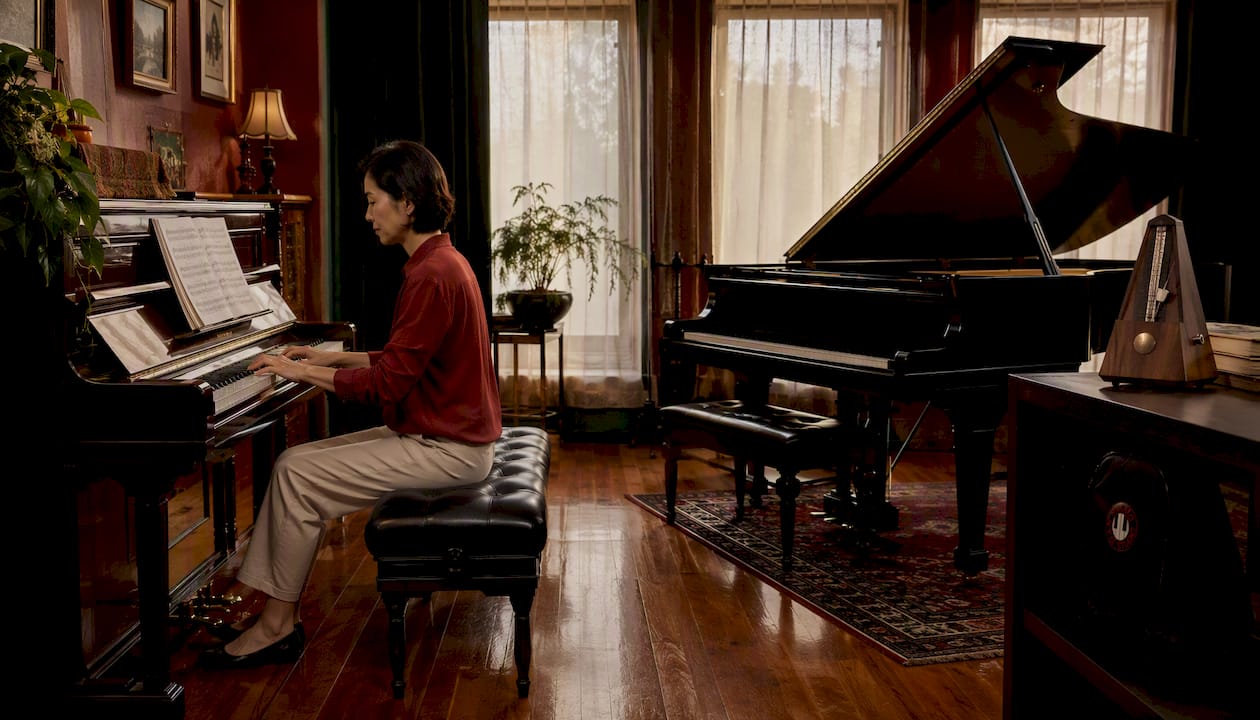
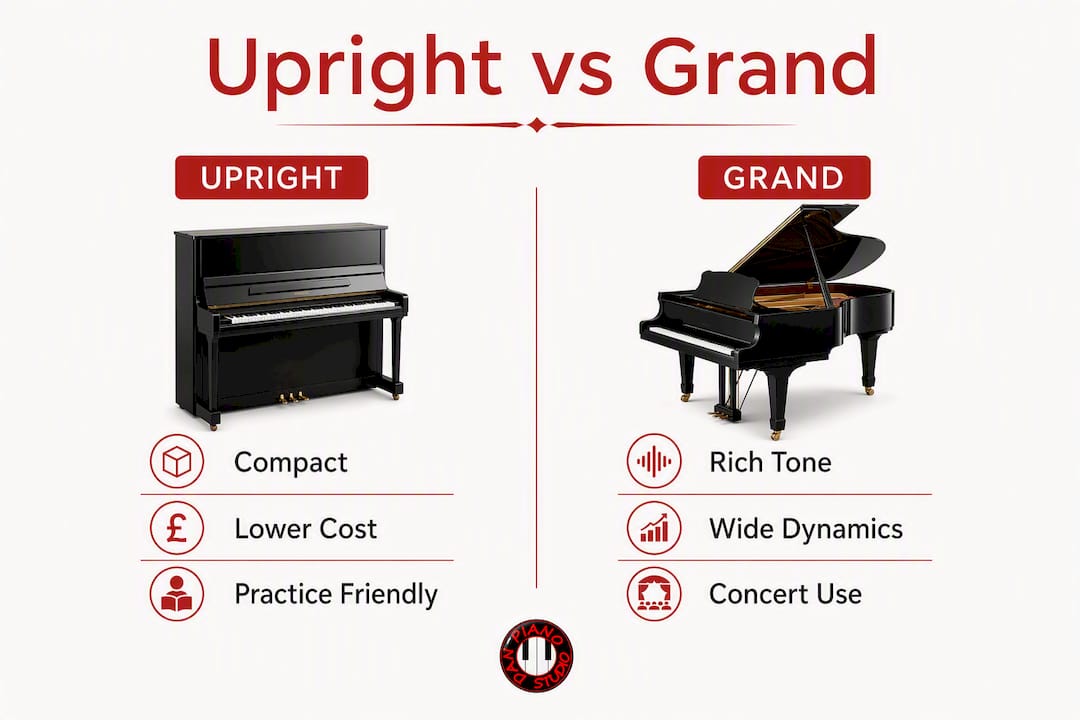
For most home buyers in the UK, an upright is the smarter first purchase. If you are an advanced performer or have the space and budget, a grand is the better long-term instrument. The right choice depends on three things: how much floor space you have, what you can realistically spend, and where you are in your playing.
A few quick qualifiers before the detail:
Space: uprights typically need around 20–24 inches of floor depth; even a baby grand requires roughly five to six feet of clear length, plus room to open the lid and seat the player comfortably.
Budget: top-range uprights in the UK reach prices considered high for uprights; entry-level grands start noticeably higher, often several thousands of pounds above a comparable upright.
Playing level: beginners and intermediate players rarely need a grand’s action to progress well; advanced students preparing for ABRSM or Trinity higher grades, and professional performers, will feel the difference.
Both Steinway and Yamaha make strong cases for each instrument type, and at Danpianostudio we see this question come up constantly from students at every level. The answer is almost never about prestige.
Table of Contents
How do upright and grand pianos compare side by side?
The table below covers the dimensions buyers in the UK care about most. Specifications give you a starting point, but they cannot replace sitting at both instruments in a showroom.
Dimension | Upright piano | Grand piano |
Size & footprint | 110–130 cm tall; 20–24 in. depth | 150–280 cm length; 5–6 ft floor space |
Action & touch | Vertical spring/strap action; repetition limited | Gravity-assisted repetition lever; faster repeat |
Sound & sustain | Shorter strings, smaller soundboard; less projection | Horizontal strings, larger soundboard; richer sustain |
Pedals & features | Soft, practice/mute middle, sustain | Soft (una corda), sostenuto, sustain |
Typical cost (new, UK) | £3,000–£10,000+ | £8,000–£100,000+ |
Typical cost (used, UK) | £500–£5,000 | £3,000–£40,000+ |
Maintenance | Tune 2× per year; regulated every few years | Tune 2–4× per year; more complex regulation |
Portability | several hundred kilograms; manageable with specialists | significantly more; requires specialist movers |
Suitability | Beginners to advanced home players, teachers | Advanced students, performers, venues |
Resale / liquidity | More liquid UK second-hand market | Slower to sell; condition critical |
Specifications tell you what a piano is built to do. They do not tell you whether the action feels right under your fingers or whether the tone suits your room’s acoustics.
Uprights vary enormously by height: a 110 cm console sounds quite different from a 130 cm studio upright.
Grands vary by length: a 150 cm baby grand and a 275 cm concert grand are practically different instruments.
Price tiers matter more than type alone: a well-maintained £6,000 upright will outplay a neglected £8,000 grand every time.
Pro Tip: Before you read any further, book a session at a dealer where you can play both types at the same price tier. Yamaha’s UK dealer network and Steinway showrooms both offer this — and the difference in feel is immediately obvious.
What should you measure before the piano arrives?
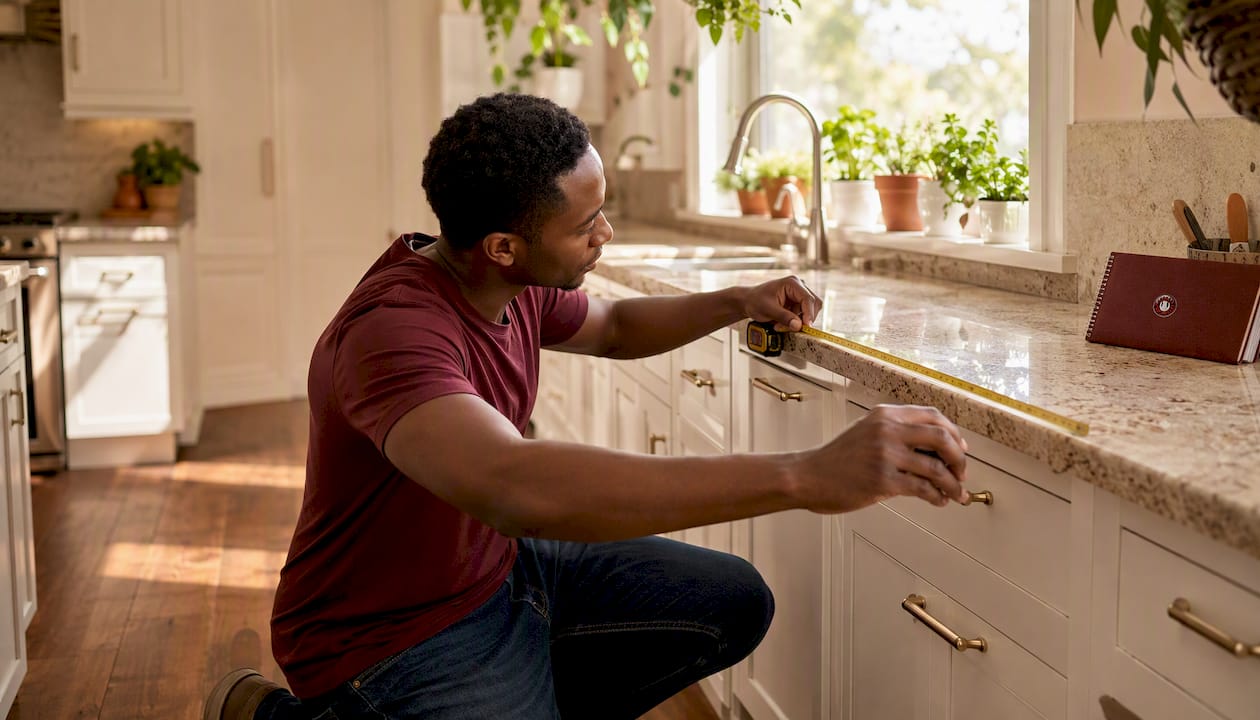
Getting a piano through a London terrace or a Victorian semi is where many buyers get a nasty surprise. Measure everything before you commit.
Uprights typically need 20–24 inches of floor depth and stand 110–130 cm tall; grands range from 150 cm to 280 cm in length and need that full run of floor space clear, plus bench room. A baby grand weighs roughly several hundred kilograms; a concert grand can weigh significantly more. Uprights generally come in at a weight range manageable by specialists with two people.
Before you book delivery, measure and note:
The narrowest doorway on the route from the street to the room (including any internal doors).
Stairwell width and any tight turns on landings.
The room’s usable floor length and width, with furniture in place.
Floor loading, particularly in upper-floor flats: a grand on a suspended timber floor may need a structural survey.
Ceiling height if you are considering a full upright (130 cm tall plus lid clearance is fine; a grand lid open on a stick needs more overhead room than most people expect).
Pro Tip: Take a tape measure to the dealer and note the exact footprint of the instrument you want. Then walk your delivery route at home with that measurement in hand. Piano movers charge extra for difficult access, and some instruments simply cannot be brought in without removing a window or door frame.
How does the action feel different on each type?
This is where the upright vs grand piano debate gets genuinely technical, and where the difference matters most to your playing.

Grand piano actions use gravity to return the hammer after it strikes the string. This allows repetition speeds of roughly 14–15 times per second, which is what makes fast trills, rapid repeated notes, and nuanced dynamic shading feel natural. Upright actions rely on springs and a bridle strap system to return the hammer, limiting repetition to around 7 times per second. For most beginner and intermediate repertoire, that gap is invisible. For advanced work — Chopin études, Ravel, anything with rapid repeated-note passages — it becomes a real constraint.
The practical differences you will notice when playing:
Key length: grand keys are longer, giving more leverage and finer control over touch weight.
Escapement: grands have a double escapement mechanism that lets the hammer re-engage the string before the key fully returns; most uprights do not.
Dynamic weight: the gradient from pianissimo to fortissimo is wider and more controllable on a grand.
Repetition: fast passages feel cleaner and more responsive on a grand, particularly above the break.
For ABRSM and Trinity exam preparation, the action difference becomes relevant from around Grade 5 upwards, where repertoire demands faster repetition and more nuanced voicing.
Pro Tip: When test-playing, run this short routine: play a trill on a single note for ten seconds, then try a repeated-note passage (like the opening of Beethoven’s “Für Elise”). On an upright, you may feel the action lagging slightly. On a grand, the response is noticeably crisper. That gap tells you more than any specification sheet.
What will each piano actually sound like in your room?
The tonal difference between an upright and a grand comes down to physics: string length and soundboard area. Grand pianos have horizontal strings and larger soundboards, which produce richer sustain, greater projection, and a wider tonal palette from bass to treble. The sound radiates downward and outward, filling a room more evenly. An upright’s strings run vertically behind the cabinet, and the soundboard faces the wall, which limits how freely the tone projects.
That said, height matters enormously for uprights. Studio and full uprights at approximately 122–132 cm have longer strings and larger soundboards than smaller console models, and the tonal improvement is audible. A 130 cm Yamaha U3 or a comparable Steinway upright sounds substantially richer than a 110 cm spinet.
When auditioning any piano, listen for:
Clarity of melody over accompaniment in the middle register.
Sustain: play a chord, release the keys, and hold the sustain pedal. How long does the tone ring before it fades?
Bass depth: play the bottom octave slowly. Does it sound muddy or defined?
Treble brightness: the top two octaves should sing, not clang.
Dynamic range: play the same phrase at pianissimo and fortissimo. Is the contrast convincing?
Yamaha’s musical instrument guide notes that grands offer “more rich and varying sonority with wide dynamics, smoother sustain, and more substantial tone” — a fair summary of what you hear in a side-by-side comparison at the same price point.
Pro Tip: Ask the dealer to play the same piece on an upright and a grand at a similar price. Sit in the room rather than at the keyboard for the first listen. The projection difference is clearest from a few feet away, not from the bench.
What do the pedals actually do, and why does it matter?
Most buyers test the sustain pedal and ignore the other two. That is a mistake, particularly if you are buying for serious study.
On a grand piano, the three pedals are:
Una corda (soft pedal, left): shifts the keyboard slightly so hammers strike fewer strings, producing a softer, more veiled tone. This is a genuine tonal colour change, not just a volume reduction.
Sostenuto (middle): sustains only the notes held at the moment the pedal is depressed, leaving subsequent notes unaffected. Used in specific repertoire (Ravel, Debussy, some Liszt) and rarely needed by beginners, but important for advanced players.
Sustain (right): lifts all dampers, sustaining everything played.
On most upright pianos, the middle pedal is a practice muffler: it drops a felt strip between the hammers and strings, reducing volume significantly for late-night practice. Some high-end uprights do include a true sostenuto, but this is the exception rather than the rule. The soft pedal on an upright moves the hammers closer to the strings rather than shifting them sideways, which reduces volume but does not change tonal colour the way a grand’s una corda does.
Pro Tip: Ask the dealer to demonstrate half-pedalling on the sustain pedal and, if the instrument has sostenuto, show you how it works in practice. Half-pedal control is a technique that develops with advanced playing, and it is noticeably more responsive on a grand. If the dealer cannot demonstrate it, that is worth noting.
What are the realistic costs and maintenance commitments in the UK?
Price is where many buyers’ expectations diverge from reality. Here is what the UK market actually looks like.
New instruments:
Entry-level uprights (Yamaha B1, similar): from around £3,000–£4,000.
Mid-range uprights (Yamaha U1/U3, Steinway upright range): £6,000–£10,000+.
Baby grands (150–170 cm): from around £8,000–£15,000 for reputable brands.
Mid-size grands (170–210 cm): £15,000–£40,000+.
Concert grands and premium Steinway models: £60,000–£100,000+.
Second-hand instruments:
Top-range uprights in the UK can cost around £10,000 new, typically about £5,000 less than a comparable entry-level grand. Used uprights in good condition start from around £500 for older models and £2,000–£5,000 for well-maintained modern instruments.
Used baby grands in playable condition typically start from £3,000, with quality instruments in the £6,000–£15,000 range.
Tuning and maintenance: most piano teachers and technicians recommend tuning twice a year for a home instrument, rising to three or four times annually for a grand in regular performance use. A standard tuning in the UK costs roughly £60–£100. Regulation (adjusting the action) and voicing (adjusting hammer hardness) are additional, typically every five to ten years for a well-maintained instrument.
Moving costs add up quickly. A specialist piano mover in London typically charges £150–£400 for a local upright move, more for a grand or a difficult access job. Budget for this when buying second-hand.
Second-hand uprights have a more liquid market in the UK than grands, which makes them a lower-risk first purchase if you are unsure whether you will stick with the instrument long-term.
Pro Tip: When buying second-hand, ask for the full service history and the name of the last technician who worked on it. A piano with no service records is a gamble. Budget at least £150–£200 for an independent technician’s inspection before you commit.
Which piano suits which type of player?
There is no objectively correct answer to whether a grand is better than an upright — suitability depends entirely on who is playing, where, and why. Here are the scenarios that come up most often.
Beginner students (children and adults): An upright is almost always the right starting point. The action difference is imperceptible at beginner level, the footprint fits most UK homes, and the resale value is more forgiving if the student stops playing. A well-chosen upright for beginners will support progress through the early grades without limitation.
Intermediate players (Grades 4–6, ABRSM/Trinity): A good mid-range upright (Yamaha U1 or equivalent) handles this level comfortably. If the student is progressing quickly and the teacher recommends it, a step up to a quality studio upright or an entry-level grand becomes worth considering.
Advanced students and performers (Grade 7+, diploma level): This is where the grand’s action and tonal range start to matter in practice. Rapid repetition, nuanced pedalling, and the dynamic control required for advanced repertoire are all better served by a grand. If a full grand is not feasible at home, regular lesson time on a grand (as Danpianostudio provides in its Central London studio) is a practical alternative.
Teachers with a home studio: A grand is the professional choice if space and budget allow. Students benefit from experiencing the action and tone, and it signals seriousness. A high-quality studio upright is a perfectly respectable alternative for a teacher working in a smaller space.
Venues and performance spaces: A grand, full stop. The projection, tonal range, and visual presence of a grand are what audiences and performers expect.
Student A — (adult beginner, London flat, budget £3,000–£5,000): buy a used Yamaha U1 in good condition. It will serve for years, and if the playing stops, it sells.
Can a high-end upright ever match a grand?
Honestly, not entirely — but the gap is smaller than most people assume, and for many players it does not matter.
Studio and full uprights at 122–132 cm have longer strings and larger soundboards than smaller console models, and the tonal improvement over a compact upright is substantial. A well-regulated 130 cm upright from Yamaha, Steinway, or a comparable maker can satisfy most players up to a high intermediate level and beyond. The action will never replicate a grand’s gravity-assisted repetition, but for the vast majority of repertoire, it is more than adequate.
Where the gap closes further:
Hybrid pianos: — Yamaha’s AvantGrand series and similar hybrid instruments combine acoustic upright cabinets with grand-style actions and digital sound systems. They offer near-grand action feel in an upright footprint, with the added option of silent practice. Available through Yamaha’s UK dealer network.
The limits are real: no upright replicates the sostenuto pedal function of a grand, the una corda tonal colour, or the full dynamic projection of a 200 cm+ grand in a concert hall. For home practice and teaching, those limits rarely matter.
Pro Tip: If you are considering a hybrid, try it in person before buying. The action feel varies significantly between models, and a showroom visit with your own test pieces is the only reliable way to judge. Check the warranty terms carefully: hybrid electronics add a layer of complexity that a purely acoustic instrument does not have.
How to test-play a piano before you buy
Whether you are at a dealer or a private sale, a structured routine takes the guesswork out of the assessment. Reputable dealers and piano teachers recommend a consistent testing approach to catch action and sound problems before purchase.
The test-play routine
Visual inspection first. Look for cracks in the soundboard, uneven key surfaces, missing or chipped ivories, and signs of water damage around the base.
Play the full range, low to high. Listen for any notes that buzz, rattle, or sound dead. A few notes slightly out of tune is normal; a note that does not speak at all is a red flag.
Test dynamics. Play the same phrase at pianissimo, mezzo-forte, and fortissimo. The transition should feel graduated, not binary.
Rapid repetition test. Play a single note as fast as you can for five seconds. Any sticking or sluggishness in the action is immediately apparent.
Trill test. Trill between two adjacent notes in the middle register for ten seconds. The action should feel even and responsive throughout.
Slow legato scales. Play a scale very slowly with full tone. Uneven key weight or a note that drops suddenly in volume reveals regulation problems.
Pedal tests. Test the sustain pedal for noise (squeaking or clicking is a servicing issue). Test the soft pedal for tonal change. Ask for a sostenuto demonstration if relevant.
Sustain and half-pedal. Hold a chord with the sustain pedal and listen to the decay. Then try half-pedalling: the tone should clear partially, not cut off entirely.
Questions to ask the dealer or seller
When was it last tuned, and by whom?
Is there a full service history?
Has it been regulated or voiced recently?
What is the age of the instrument, and has it had any major repairs?
Is moving included, or is that a separate cost?
What warranty applies (new instruments only)?
Red flags to walk away from
Action that feels uneven across the keyboard, with some notes noticeably heavier or lighter than their neighbours.
Any sign of cracking or separation in the soundboard.
No service history on an instrument over ten years old.
A seller who will not allow an independent technician’s inspection.
Pedals that squeak, stick, or feel loose.
Pro Tip: Bring a piece you know well to the audition. Playing familiar repertoire on an unfamiliar instrument tells you far more than playing scales you have never practised. You will immediately feel whether the action suits your touch.
Key takeaways
For most UK buyers, an upright is the practical first choice; a grand becomes the right investment when space, budget, and playing level all align.
Point | Details |
Uprights suit most home buyers | Compact footprint, lower cost, and a more liquid second-hand market make uprights the lower-risk starting point. |
Grand action is genuinely different | Gravity-assisted repetition at roughly 14–15 times per second versus around 7 for uprights — audible from Grade 5 upwards. |
Height matters for uprights | Studio uprights at 122–132 cm have longer strings and larger soundboards; choose the tallest you can fit and afford. |
Budget for the full cost | Add tuning (£60–£100 twice yearly), regulation, and specialist moving (£150–£400+) to the purchase price. |
Danpianostudio’s recommendation | Try both types in lessons before buying; Danpianostudio’s Central London studio uses a grand, giving students direct comparison experience. |
The instrument choice that actually matters
Most of the debate around upright vs grand piano focuses on the wrong question. Buyers spend weeks agonising over which type to buy, when the more pressing issue is whether the instrument they choose will actually be played.
A neglected grand in a cold room, untuned for three years, is a worse learning tool than a well-maintained upright that gets played every day. The action difference between a quality upright and a baby grand matters enormously to a concert pianist preparing a Prokofiev concerto. For a student working through their early grades, or an adult returning to the piano after twenty years, it is almost irrelevant.
What I see consistently in teaching is that students who buy instruments above their current level often feel intimidated rather than inspired. A grand in a small flat, with its lid permanently closed to avoid disturbing neighbours, teaches nothing. An upright in a comfortable room, tuned regularly and played daily, teaches everything.
The practical advice I give students at Danpianostudio: start with the best upright your budget and space allow. If you reach a level where the action genuinely limits your playing, you will know it, and by then you will also know exactly what you need in a grand. That is a much better position to buy from than guessing at the beginning.
Lessons before purchase: how Danpianostudio can help
Buying a piano without spending time on both types is like buying a car you have only seen in photographs. Danpianostudio’s piano lessons in Central London give you direct experience on a grand as part of your regular lesson programme, so you can judge for yourself whether the action and tone make a meaningful difference to your playing before committing to a purchase.

For students who cannot travel to the studio, online piano lessons are available and can include specific guidance on instrument selection, what to listen for at a dealer, and how to match your current repertoire to the right instrument type. Whether you are a complete beginner weighing up your first purchase or an intermediate player considering an upgrade, the studio’s experience across classical, jazz, and exam preparation means the advice is grounded in how instruments actually perform under real playing conditions. Book a lesson and use it to answer the question the specifications cannot.
Further reading and useful sources
Steinway UK: Grand vs Upright Pianos — Manufacturer guidance on choosing between types, with practical advice on space, budget and intended use. Worth reading before visiting a showroom.
Yamaha Musical Instrument Guide: Choosing a Piano — Yamaha’s own explanation of grand piano features and how they affect tone and touch; useful for understanding what you are listening for at a dealer.
Petrof: Grand vs Upright Piano Sizes — Clear dimensional data for both types, including weight ranges and floor-space requirements.
Cunningham Piano: Upright Piano Buyer’s Guide — Detailed guidance on upright piano heights, string lengths, and how size affects sound quality.
Princeton Pianos: Upright vs Grand — Covers pedal differences in detail, including the sostenuto distinction between types, with clear explanations for buyers.
Verify demo availability with your local dealer before travelling, as showroom stock changes regularly.
Recommended


Comments