


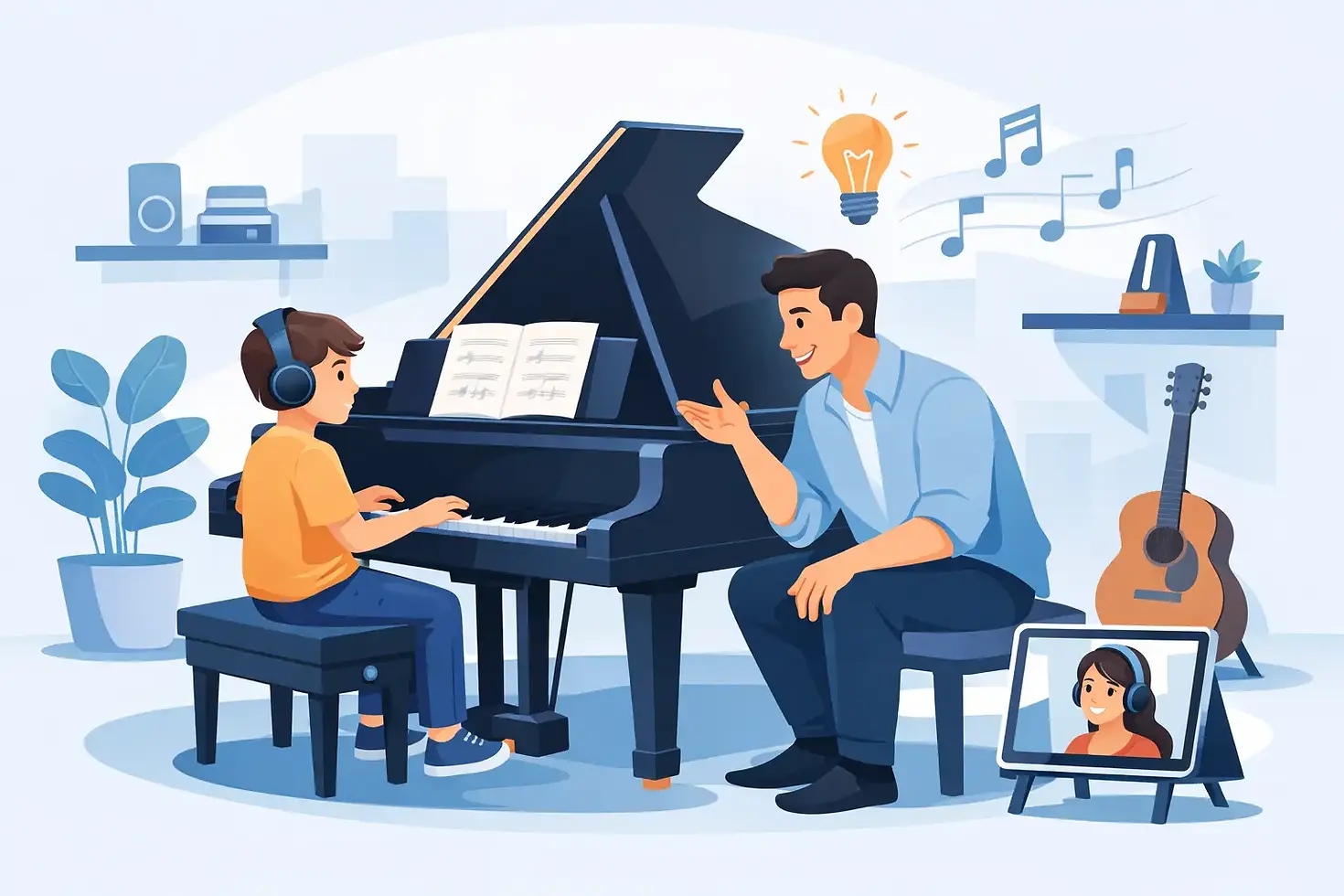
How to Choose Piano Teacher for Real Progress

A piano lesson can look excellent on paper and still be the wrong fit once the music starts. One teacher may be brilliant for a Grade 5 student preparing for ABRSM, while another is exactly right for an adult beginner who wants to play jazz standards with confidence. If you are wondering how to choose piano teacher support that genuinely helps you improve, the key is not finding the most impressive profile. It is finding the right match for your goals, learning style and stage.
Start with the kind of pianist you want to become
Before comparing teachers, get clear about what you want from lessons. This sounds obvious, but it is where many students and parents get stuck. If your goal is vague - such as “get better at piano” - it is hard to judge whether a teacher is right for you.
A child starting from scratch often needs a teacher who can build solid habits, keep lessons engaging and introduce reading in a patient, structured way. A teenager working towards graded exams may need consistent technical work, theory support and a teacher who understands how to prepare for assessment without making music feel mechanical. An adult returning to the piano may care less about certificates and more about confidence, repertoire and steady progress after years away.
Style matters too. Classical and jazz training overlap in important ways, but the lesson focus can be quite different. Classical students may want strong reading, technique, interpretation and exam preparation. Jazz students may need work on chords, rhythm, improvisation and listening skills. Some teachers cover both well. Others are much stronger in one area.
If you know your aim, even roughly, you will ask better questions and avoid choosing someone simply because they are nearby or available on a convenient day.
How to choose piano teacher based on teaching fit
The best piano teacher is not always the most advanced performer. Strong playing matters, of course, but teaching is its own skill. A good teacher can diagnose problems clearly, explain ideas in simple language and adapt to the student in front of them.
That last point is especially important. Some students thrive with a very direct, disciplined approach. Others need encouragement first, then challenge. Younger learners often need structure with variety. Adult learners usually appreciate clear reasoning - why this fingering, why this scale, why this practice method.
A good sign is when a teacher talks not only about what they teach, but how they teach. Do they mention personalised lesson planning? Do they balance repertoire, technique and theory? Can they adjust for beginners, developing players and exam candidates? A one-size-fits-all approach may work for a while, but it rarely supports long-term growth.
It is also worth noticing whether the teacher helps students build independence. The aim is not just to get through one lesson a week. It is to help the student practise better between lessons and hear their own progress more clearly.
Credentials matter, but context matters more
Qualifications, performance experience and exam knowledge are valuable. They show training and credibility. If you are preparing for ABRSM or TRINITY, you should absolutely look for a teacher with experience in those pathways.
Still, credentials alone do not guarantee a good fit. A highly qualified teacher who communicates poorly may leave a beginner confused. A warm and encouraging teacher with limited structure may not be ideal for a student who wants serious progression.
Look for the combination: musical expertise, teaching clarity and a track record of helping students move forward.
Look closely at lesson structure
Students often improve faster when lessons follow a clear framework. That does not mean every minute needs to feel rigid, but there should be a sense of direction.
In practical terms, good piano lessons usually include some mix of technique, repertoire, rhythm, reading, theory and musical listening. The balance depends on the student. A complete beginner may need more work on note reading and basic coordination. A more advanced player may focus on phrasing, tone, stylistic detail or improvisation.
If lessons seem random from week to week, progress can become patchy. You may learn pieces without understanding the patterns behind them, or practise hard without knowing what to improve. Structured teaching helps students feel that each lesson connects to the next.
For families, this matters because it makes progress visible. For adult students, it matters because limited practice time needs to count.
Ask how progress is measured
Progress is not only about passing an exam, though exams can be a useful milestone. A thoughtful teacher should be able to explain how they track development. That might include technical goals, repertoire milestones, reading fluency, theory understanding, aural work or confidence in performance.
If a teacher can describe the next step clearly, that is a strong sign. If everything stays vague, students often lose momentum.
Personality and communication make a bigger difference than people expect
Piano study is personal. Students are asked to try, miss, repeat and improve in real time. That requires trust. Whether lessons are for a six-year-old, a busy adult or a teen preparing for an exam, communication matters almost as much as content.
You want a teacher who is encouraging without being vague and honest without being discouraging. Feedback should feel useful, not crushing. Students should leave with a clearer sense of what to do next.
Parents should also feel that expectations are clear. How much practice is recommended? What support is needed at home? How are lesson notes handled? Good communication removes uncertainty, which is one of the biggest barriers to steady improvement.
For online lessons, this becomes even more important. Virtual teaching can be highly effective, but only when the teacher knows how to guide clearly, listen carefully and keep lessons focused through the screen.
How to choose piano teacher for children, teens and adults
Different ages often need different teaching strengths. That does not mean teachers must only work with one group, but it does mean experience matters.
For children, look for patience, consistency and an ability to make structure feel manageable. Young beginners need a teacher who can spot small issues early and turn them into good habits before they become frustrating ones.
For teens, the challenge is often motivation. Some want exams and clear targets. Others are balancing school, hobbies and changing interests. A strong teacher can keep standards high while making the music feel relevant and rewarding.
For adults, respect matters. Adult beginners do not want to be treated like children, and returning players often need a teacher who can rebuild technique without embarrassment. Practical lesson planning, realistic goals and flexible pacing make a real difference here.
Consider logistics, but do not let convenience be the only factor
A local teacher with an easy schedule can be appealing. So can a virtual option that removes travel time altogether. Both can work very well. The better choice depends on the student, the household routine and the quality of the teaching.
In-person lessons may suit younger children or students who focus better in the room with the teacher. Online lessons can be excellent for busy adults, remote learners and families who want consistency without extra travel. What matters most is whether the format supports concentration, communication and regular attendance.
It is also sensible to ask about lesson length, cancellation policy, availability and whether there is a recommended practice routine. These practical details shape the learning experience more than many people expect.
Watch for signs of a good long-term fit
A piano teacher should meet your current needs, but ideally they should also support your next stage. If you are a beginner now, can this teacher guide you into intermediate playing? If you want to move into jazz later, or prepare for an exam next year, is that within their teaching range?
This is where a personalised studio often stands out. A teacher who offers one-to-one lessons, structured progression and support across classical, jazz, theory and exam preparation can give students room to grow without constantly starting over with someone new. Dan Piano Studio is built around that kind of individual progression, which is why many students value it.
You do not need a perfect answer from the first lesson. Sometimes the right teacher becomes clear after a trial session or two. But you should come away feeling that the teacher noticed you, understood your goals and had a plan for helping you move forward.
A good piano teacher does more than fill a lesson slot in the week. They help make practice feel purposeful, progress feel possible and music feel like something you can truly own.


Comments