


Background piano music events: a booking checklist for hosts

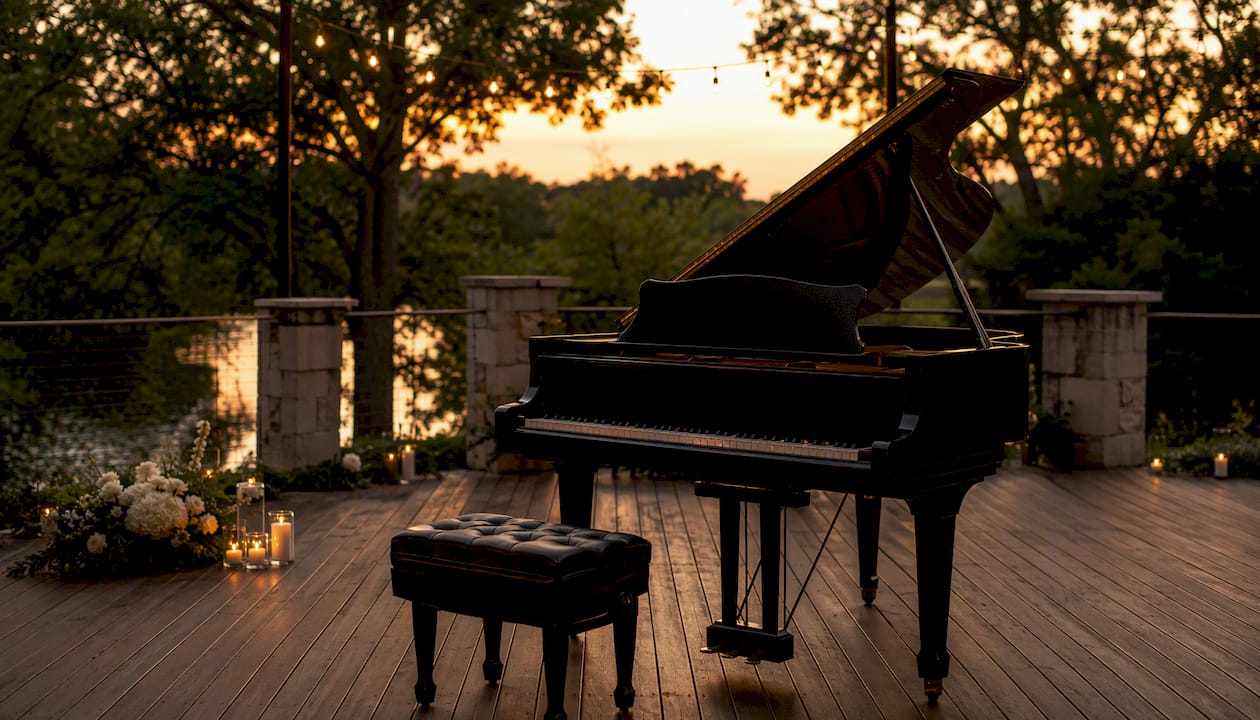
Book a verified pianist who carries Public Liability Insurance, PAT-tested equipment where needed, and a written contract with clear deposit and cancellation terms. For summer weddings and peak corporate season, aim to book at least 12 months ahead, though agencies can sometimes fill gaps at short notice.
That’s the whole answer in one breath. Everything else is detail that stops the booking going wrong on the day.
Before you pay a deposit, run through this:
Lead time: 12 months for summer dates, less for quieter months or midweek corporate functions.
Insurance: ask to see the Public Liability Insurance certificate, not just a verbal confirmation.
Repertoire brief: tell the pianist whether you want ambient, jazz standards, or classical piano for events, and roughly how many sets.
Equipment: confirm whether they use the venue’s piano or bring a digital keyboard, and who covers amplification.
Money terms: deposit amount, cancellation window, and what happens if the event overruns.
If you’re planning a private party or a corporate reception in England and want a local option, Dan Piano Studio takes bookings for live piano performance alongside its lesson programme, and can talk you through repertoire and logistics before you commit.
Pro Tip: Ask for a short video clip of the pianist playing in a similar setting, a reception or dinner, not a concert hall. It tells you more about how they read a room than any biography.
Key Takeaways
Securing reliable background piano music for an event comes down to booking early, verifying insurance, and locking every fee into a written contract before you pay a deposit.
Point | Details |
Book early for peak dates | Aim for 12 months ahead for summer weddings; agencies can sometimes help at shorter notice. |
Verify insurance and safety | Request the PLI certificate and PAT testing evidence for any electrical equipment. |
Confirm the technical setup | Agree piano type, amplification, power access, and load-in logistics in advance. |
Get terms in writing | Lock in deposit, cancellation policy, overtime rate, and travel fees before paying. |
Consider a direct local hire | Dan Piano Studio offers live piano performance for events across England alongside its lesson programme. |
Table of Contents
A pianist’s view: mistakes hosts make and how to avoid them
The most common error is leaving booking until six or eight weeks out, then discovering every decent pianist within reach is already taken for a wedding season Saturday. The second is assuming insurance is a given. It isn’t. Venues increasingly expect visiting performers to supply Public Liability Insurance and PAT testing evidence for any electrical kit, and plenty of pianists still turn up without either.
A subtler mistake is never asking which instrument the pianist will actually play. A grand in the ballroom sounds nothing like a digital keyboard through a small amp, and the difference matters more at a quiet dinner than a bustling drinks reception. Pianists and keyboardists are booked regularly for cocktail hours, sit-down dinners, and receptions, but price and setup change sharply depending on whether they use the venue’s own piano or bring their own.
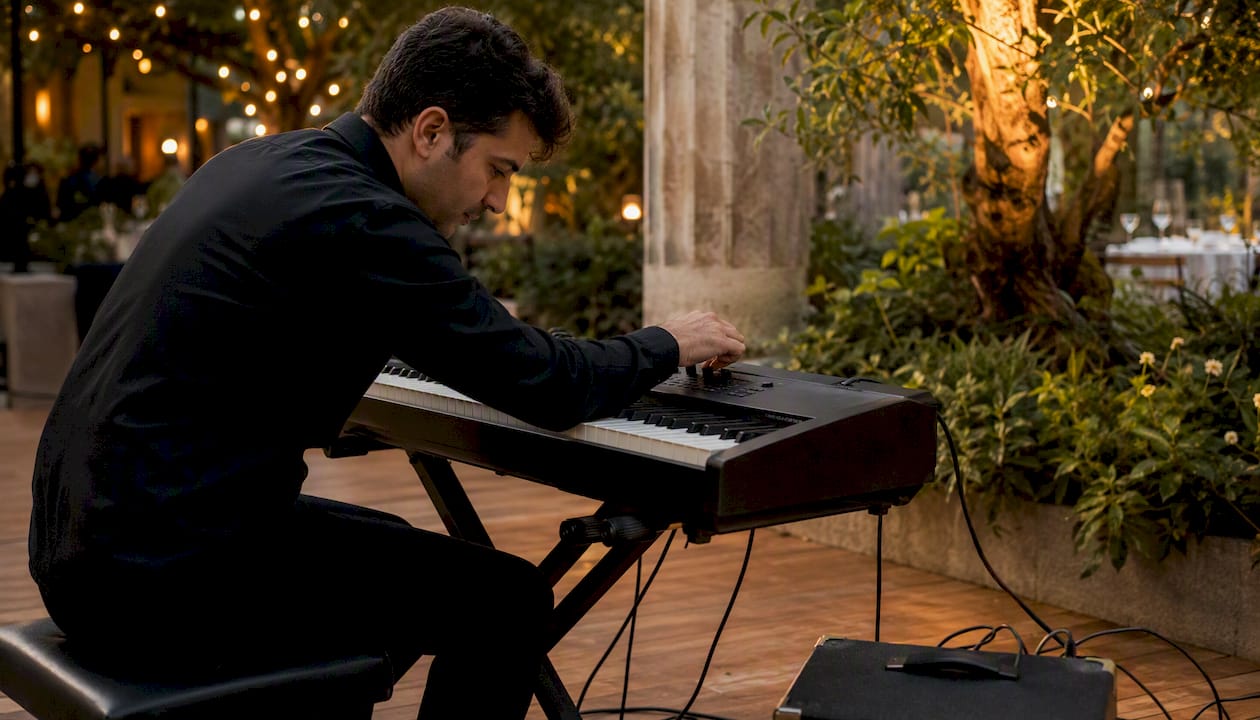
Before you commit, ask five things: are you free on the date, do you hold current PLI, what equipment will you bring, what’s your contingency if you’re ill, and what are the deposit and cancellation terms? A pianist who answers all five without hesitation has done this before. One who dodges the insurance question hasn’t thought about it properly.
Pro Tip: Get a written rider covering amplification, power sockets, and a final run sheet with set times. It costs nothing and removes almost every day-of surprise.
Final checks before you sign and pay
The single most reliable predictor of a smooth event is a pianist who can produce paperwork, not just promises, before the deposit changes hands.
Availability: confirm the date in writing, especially for June to September bookings.
Insurance and safety: request the PLI certificate and, if they’re bringing amplification or a digital piano, a PAT testing record.
Technical setup: agree piano type, amplification, power access, and whether there’s lift access if the venue is upstairs.
Money and contract: deposit, cancellation policy, overtime rate, travel costs, and whether PRS or PPL licensing falls to you or the venue.
Trust signals: Musicians’ Union membership, a sample setlist, an audio or video clip, and at least one client reference.
Where to check the rules and find a pianist
Two organisations matter most for the legal and professional side of this. The Musicians’ Union publishes a hiring checklist covering PLI, licensing, contracts, and cancellation questions, aimed squarely at organisers rather than musicians. PRS for Music and PPL both cover public performance rights. In practice, most private and corporate bookings sit with the venue’s existing licence, but it’s worth confirming rather than assuming, particularly for a corporate function in a hired space without its own entertainment licence.
For sourcing a pianist, you have three realistic routes: musician directories and marketplaces, dedicated booking agencies, or a direct hire through a local studio. Agencies tend to charge a premium but handle contracts and contingency cover for you. Direct hire through a studio, such as Dan Piano Studio for events across England, usually costs less and gives you a named person to speak with throughout.
Ask for the PLI certificate, a PAT test record where relevant, a rider, a sample setlist, and two references before you pay anything. If a pianist can’t produce these within a day or two, treat it as a warning sign rather than an oversight.
Porterage fees often apply when a performer carries their own digital piano up stairs or a long distance from the car park, so ask about load-in distance early. And if your event includes children or a school tie-in, curated song lists for younger audiences can help shape a repertoire brief that suits the room rather than just the pianist’s usual set.
Comparison factor | What to check |
Price structure | Base fee, overtime rate, travel cost, and any porterage charge |
Availability | Written confirmation of your exact date and set times |
Repertoire fit | Ambient, jazz, or classical piano for events matched to your guest list |
Equipment | Venue piano versus performer’s digital keyboard, and amplification needs |
Insurance and licences | Current PLI certificate and PAT testing where electrical kit is used |
References | At least one prior client and a short audio or video sample |
Book Dan Piano Studio for your next event
Rather than trawling directories or paying an agency’s markup, you can go straight to a local studio that already knows how to read a room. Dan Piano Studio provides live piano performance for private parties and corporate events across England, alongside its Central London and online lesson programme, so you’re dealing with a pianist who treats the booking as a professional engagement, not a side gig squeezed between other jobs.
That matters most when you want ambient piano music that supports conversation rather than competing with it, whether that’s a cocktail hour, a wedding drinks reception, or a quiet corporate dinner. If you’re weighing up a one-off booking against a longer arrangement, it’s worth reading about hiring a pianist in residence for repeat events. For wedding-specific timing and repertoire, the guide to ceremony piano music covers the details agencies often skip.
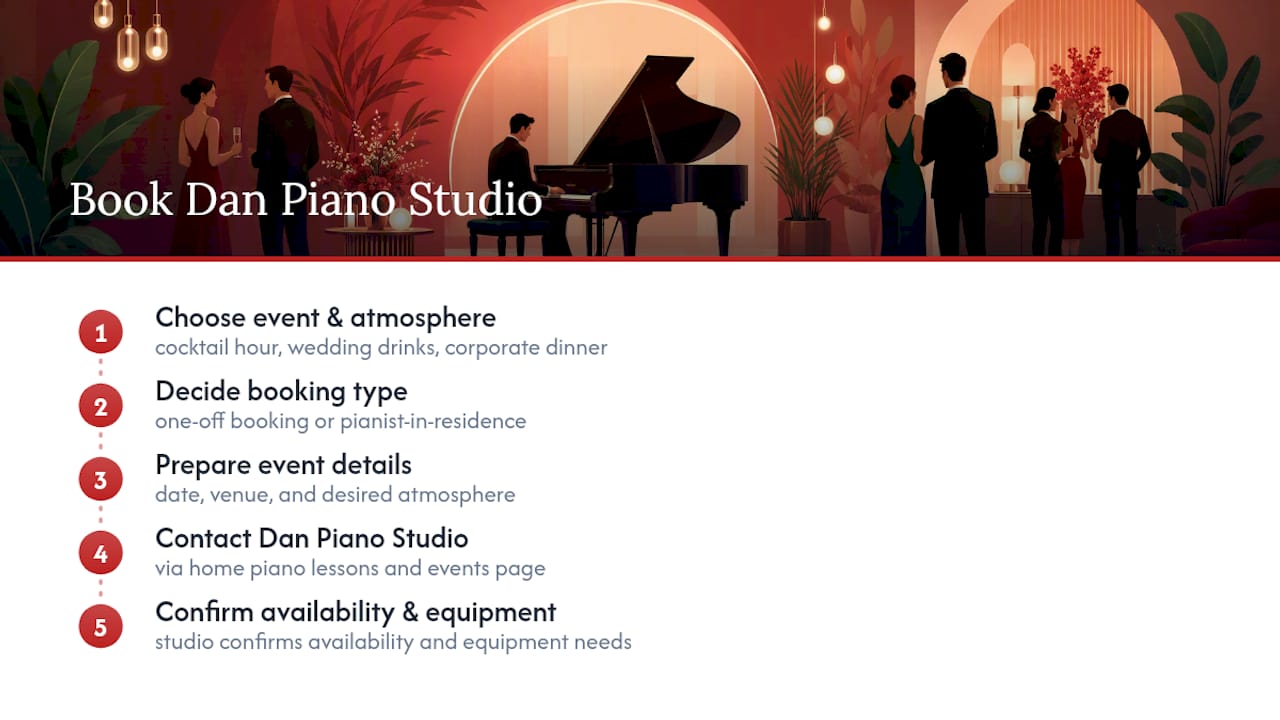
To move forward, get in touch through the home piano lessons and events page with your date, venue, and the atmosphere you’re after, and Dan Piano Studio will confirm availability and talk through equipment needs before you commit to anything.
Frequently asked questions
How far ahead should I book a pianist for a wedding or corporate event? For summer dates, book roughly 12 months ahead. Off-peak or midweek corporate events can often be arranged with a few months’ notice.
Does the pianist need Public Liability Insurance? Most venues expect it, and you should ask to see the certificate rather than take it on trust, along with PAT testing evidence for any amplification equipment.
Who’s responsible for PRS or PPL licensing? This usually sits with the venue’s existing entertainment licence, but confirm this directly rather than assuming, especially for hired spaces without one.
What should I ask before booking? Availability, insurance, equipment they’ll use, a contingency plan if they’re unwell, and the exact deposit and cancellation terms.
Should the pianist bring their own piano? Ask which they’ll use. A venue’s grand piano and a performer’s digital keyboard sound and cost differently, and porterage fees may apply if they’re carrying their own instrument any distance.
Sources
Recommended


Comments