


Studio Tested Ten Minute Routines That Fix Advanced Piano Technique

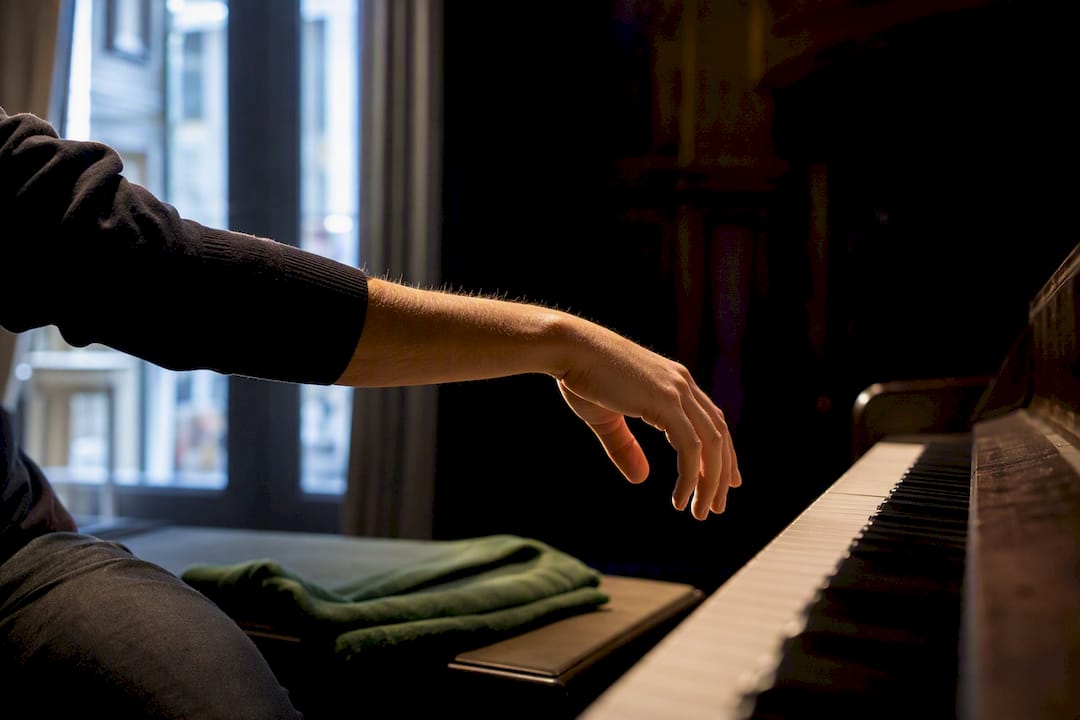
Stop repeating passages and start diagnosing them. In your next session, run short diagnostic loops on one troublesome bar, isolate the exact motion that fails, drill it with a metronome-layered fix, then rebuild it into the phrase and test it at speed. Students often see faster gains with this loop than with hours of blind repetition.
TL;DR:
The most effective technical drills focus on diagnosing specific faults, isolating small problem areas, and reintegrating solutions into the full passage.
Advanced technique relies on controlled movement, proper joint mechanics, and consistent tension management rather than sheer speed or force.
Building strength and control requires targeted exercises like scale in contrary motion, octave routines, and finger independence drills, practiced daily.
Mental rehearsal and simulated performances are crucial for developing reliability under pressure and reducing performance anxiety.
Personalized coaching and diagnostic practice loops provide the fastest progress, especially for resolving stubborn technical issues.
Table of Contents
What actually defines advanced piano technique?
Advanced piano technique isn’t about playing faster or louder than everyone else. It’s control: over movement, over tension, over the exact sound you produce at any speed. A pianist with genuinely advanced technique can play a Chopin étude at performance tempo and still adjust the weight of a single inner voice on demand.
That control starts at the joints. Efficient playing uses the arm as a lever system, wrist as a shock absorber, and fingers as the final point of contact, not the engine driving everything. When students rely on finger strength alone, the forearm tightens, the wrist locks, and fast passages fall apart under pressure. Rotational forearm movement, not isolated finger force, powers most fast, even passagework.
Tension is the real enemy, and most players carry it without noticing. A quick self-test: play a phrase, then freeze and check your shoulders, wrist, and thumb. If any of them feel locked rather than resting, that’s excess tension leaking into the sound. Release it by dropping the arm fully between phrases, even mid-piece if the passage allows a breath.
Touch and tone are inseparable from mechanics. A harsh sound almost always traces back to a stiff wrist or a finger attacking from too high above the key. Smooth, controlled tone comes from staying close to the keybed and using arm weight rather than impact.
Two checks worth running weekly:
Record yourself at performance tempo and at half speed, then compare tone quality, not just accuracy.
Isolate a single bar and test it in total silence (fingers on keys, no sound) to feel whether the motion itself is efficient before you judge the result.
Pro Tip: Record video from the side, not the front. Side angles reveal wrist height and arm-drop far more clearly than the mirror ever does.
How do you build a practice system that actually fixes technical problems?
Random repetition rarely fixes anything specific. A four-step loop does: diagnose, isolate, solve, reintegrate. This is the backbone of how Dan Piano Studio structures practice sessions with intermediate and advanced students, and it works because each stage has one job only.
Diagnose. Play the passage at tempo and name the exact failure point, not the general area. “Bar 34, the thumb crosses late” is diagnosis. “That bit near the end” is not.
Isolate. Strip the problem to its smallest playable unit, often two or three notes, and practise it slowly enough that zero tension appears.
Solve. Apply micro-variations: change the rhythm, accent different notes, alter dynamics. This is the layer-cake approach many practice guides recommend, and it works because varying the input forces the motor pattern to stabilise rather than just repeat.
Reintegrate. Chain the fixed unit back into the surrounding phrase, then the full passage, then the whole section, checking that the fix survives contact with speed and context.
Session design matters as much as the loop itself. Diagnostic work belongs first, while concentration is sharpest. Save pure repertoire run-throughs for the middle of a session, and put mock performances or sight-reading last, when fatigue mimics performance pressure.
Rhythmic displacement (dotted rhythms, swapped accents) exposes weak spots metronome speed changes alone won’t reveal.
Pro Tip: If a passage still fails after three reintegration attempts, the unit you isolated was too large. Cut it in half and start again.
Which exercises build real technical strength?
Scales, arpeggios, and octaves are core components of advanced piano technique, as supported by ABRSM practical grade specifications, not because they’re traditional but because they isolate specific mechanical skills nothing else does cleanly. The ABRSM practical grade specifications define technical requirements like scales, arpeggios, pedalling, and hand stretch for formal assessment [ABRSM syllabus] and still anchor scale, arpeggio, and pedalling requirements around exactly this logic, and they’re a useful benchmark even if you’re well past exam grades.
Scales and arpeggios in contrary motion expose asymmetries between hands that parallel practice hides.
Finger independence drills, like holding two notes while the remaining fingers articulate a pattern, build the control voicing demands later. Dan Piano Studio’s finger independence guide breaks this down step by step.
Octave routines target forearm rotation and endurance specifically. The studio’s own 10 to 15 minute octave routine is designed to be run daily rather than occasionally, because octave clarity depends on repeated, short exposure more than marathon sessions.
Classical players tend to prioritise scale evenness and pedal precision; jazz players lean harder into voicing flexibility and rapid arpeggiated patterns across changing harmony, something Berklee’s keyboard skills curriculum treats as inseparable from improvisation training.
Drill type | Primary benefit | Style emphasis |
Contrary-motion scales | Hand symmetry | Classical and jazz |
Octave routine | Forearm endurance | Both, especially Romantic repertoire |
Finger independence holds | Voicing control | Jazz comping, classical inner lines |
Broken-chord arpeggios | Harmonic fluency | Jazz improvisation |
Sequence warm-ups from slow, tension-free scales into faster arpeggios, then finish with a short octave block before touching repertoire.
How do you turn secure technique into musical control?
Voicing is where technique becomes musicianship. Bringing out an inner line while the surrounding texture stays quiet requires finger-level dynamic control most players never isolate deliberately: practise a chord voicing by playing the target note alone first, then adding the other notes at a lower volume until the balance holds without conscious effort.
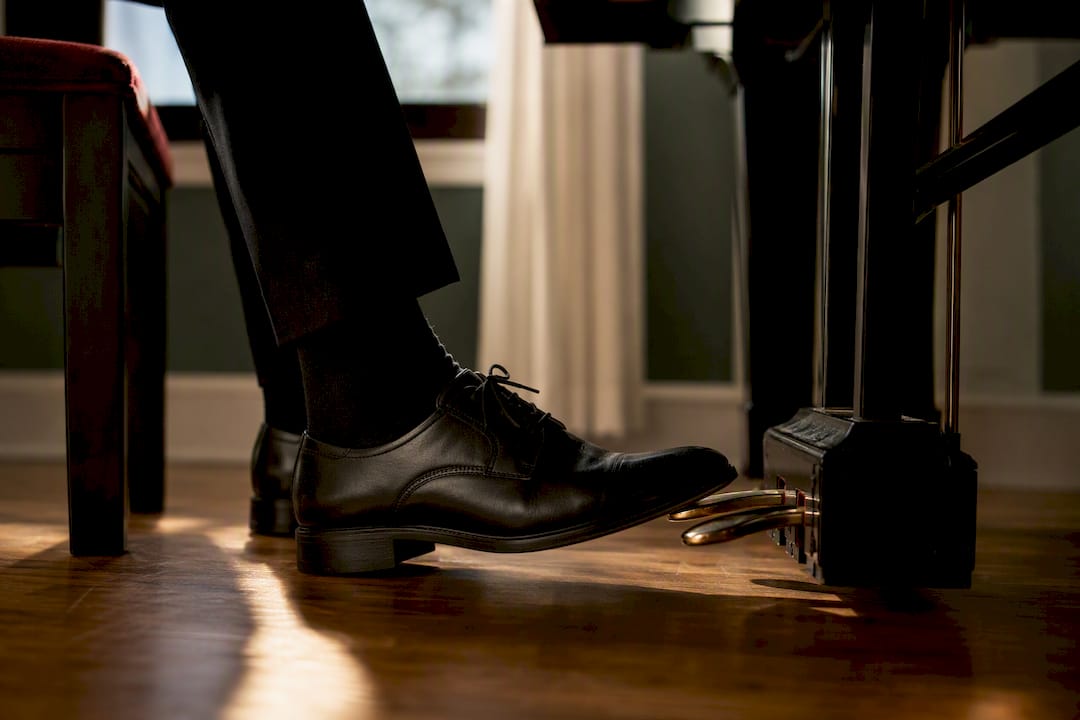
Pedalling causes more muddiness in advanced players than almost anything else, usually from changing the pedal too late or too shallow. Half-pedalling drills, where you practise lifting only partway to clear specific overtones, fix this faster than full-pedal repetition ever does.
For large intervals and octave jumps, economy of motion beats reach. Rotate the forearm toward the target note rather than lifting the whole arm vertically. It’s a smaller motion and it’s more accurate under tempo pressure.
Practical checks for musical outcomes:
Record a passage and listen specifically for balance between melody and accompaniment, not just accuracy.
Ask a teacher to identify one voicing or pedalling issue you genuinely can’t hear yourself.
Compare two recordings a week apart to check whether a fix has actually stabilised.
Why mental practice matters as much as physical drilling
Mental rehearsal, running the score in your head with full auditory imagery away from the instrument, builds the same neural pathways as physical practice, without the physical strain. Score study on the train or before sleep is genuinely useful practice time, not a substitute for it.
Mock performances close the gap between practice room and stage. Research on performance anxiety interventions finds that simulated performances and recording sessions reduce anxiety and improve playing reliability more effectively than additional note-learning alone.
Run a full mock performance weekly, ideally recorded, with no stopping for mistakes.
Play for a friend or family member occasionally, even informally, to rehearse under mild social pressure.
Watch for overuse signs: persistent forearm ache, tingling fingers, or pain that doesn’t ease after rest. These warrant a physiotherapy consultation, not more practice.
Reliability under pressure is trainable, and it responds to rehearsal structure as directly as any scale pattern does.
What has Dan Piano Studio’s teaching actually shown works?
A 10 to 15 minute octave routine, practised daily rather than in occasional long sessions, can improve clarity and reduce fatigue for students who had previously avoided octave passages altogether. Short, frequent exposure beats infrequent marathon drilling for this specific skill.
This teaching approach applies the diagnose, isolate, solve, reintegrate loop directly with students, adjusting the isolation stage to each player’s specific mechanical habits rather than prescribing generic fixes. For deeper reading:
. This grounding shapes how technical faults get diagnosed in lessons, with attention to the mechanical cause rather than just the audible symptom.
How do advanced sight-reading and improvisation sharpen your technique?
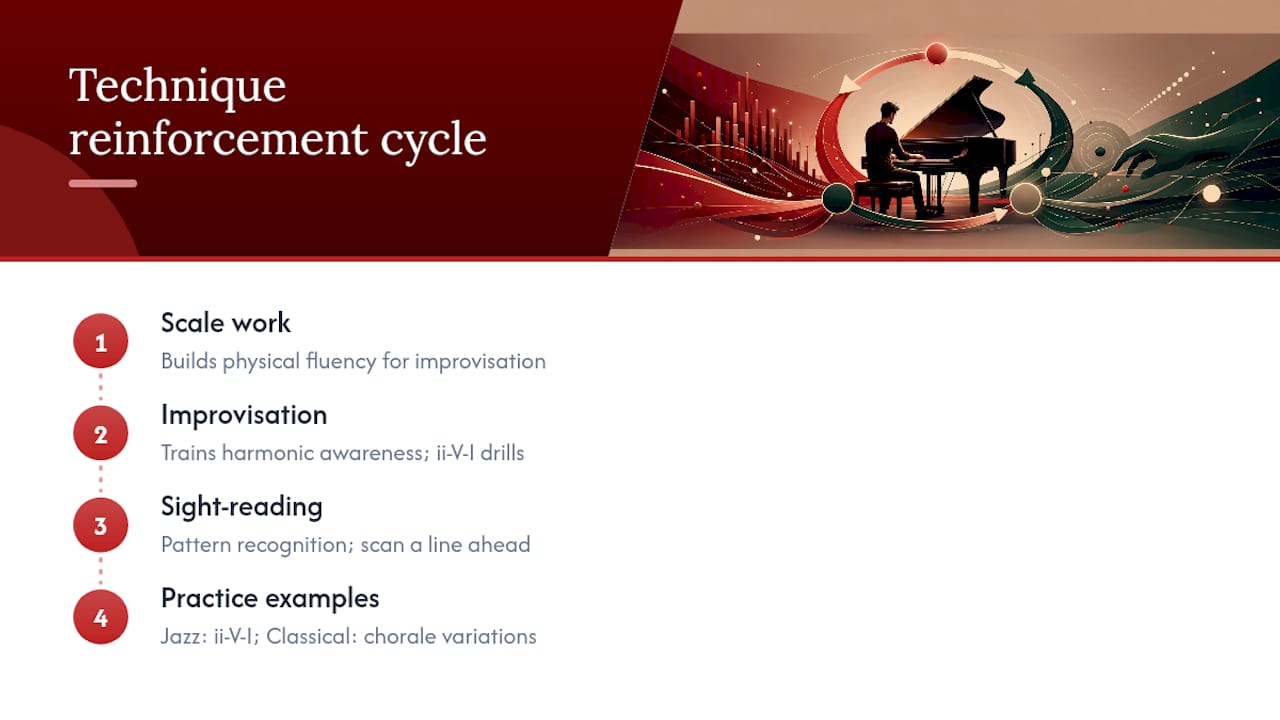
Sight-reading at an advanced level isn’t about reading faster. It’s about pattern recognition: seeing a scale run, an arpeggiated chord, or a familiar cadential shape and playing it from shape memory rather than note-by-note decoding. Building this means practising with material slightly above your comfort level, daily, in short five-minute bursts rather than occasional long sessions.
Two habits accelerate this fastest. First, always scan a full line ahead of where your hands currently are; your eyes should be reading bar four while your hands play bar three. Second, practise harmonic sight-reading separately from melodic sight-reading: look at a lead sheet or a chorale and identify the chord progression before you touch the keys.
Improvisation trains something sight-reading can’t: real-time decision-making under harmonic constraint. Jazz pianists develop this through ii-V-I pattern drilling across all keys, then applying those patterns over real tunes at slow tempo before pushing speed. Classical players benefit from a lighter version, improvising simple variations on a Bach chorale or a Classical-era theme to internalise voice-leading rather than just reading it.
Berklee’s keyboard curriculum treats improvisation and technical scale work as genuinely inseparable, and that’s worth taking seriously even if your main repertoire is classical. The physical fluency scales build feeds directly into the confidence improvisation requires, and the harmonic awareness that improvisation builds feeds directly back into sight-reading speed. Neither skill develops in isolation from the other once you’re working at an advanced level.
How do you fold technique into actual musical phrasing?
Technique that stays separate from phrasing is only half-finished. A perfectly even scale run means little if it doesn’t shape toward the phrase’s harmonic destination. The fix is to practise technical passages with the same phrasing decisions you’d apply to a slow melody: where does the line breathe, where does it lean forward, where does it release?
Try this concretely: take a fast arpeggiated passage and mark where the harmonic tension peaks. Then practise the passage slowly, leaning very slightly into that peak with weight and tempo, even exaggeratedly at first, before bringing it back to tempo. The exaggeration teaches your hands where the musical destination is, so when you play at full speed, the shape survives even though the exaggeration disappears.
Dynamics and articulation are the tools that carry phrasing through technical demands. Finger staccato, a light, precise release rather than a wrist bounce, lets you articulate quick passages with genuine dynamic nuance instead of uniform loudness. Practising a technical passage at three dynamic levels (piano, mezzo forte, forte) while keeping the same fingering forces phrasing decisions to survive changes in intensity.
The test of whether integration has actually happened: play the passage for someone unfamiliar with the piece and ask what the music is doing, not whether the notes were correct. If they can describe the shape and direction of the phrase, the technique has done its job. If they can only comment on speed or accuracy, the technical work and the musical work are still running on separate tracks.
Dan’s take: the one habit that moves advanced players fastest
Daily short diagnostic practice sessions focusing on a single bar are more effective than occasional long practice sessions. One studio student cleared a persistent octave stumble in two weeks using nothing but this, ten minutes a day. Try it for a fortnight and log tempo, accuracy, and tension honestly.
— Dan
Ready to put this into practice with expert guidance?
Reading about diagnostic practice loops is one thing. Having someone spot the exact mechanical fault in your bar 34 in real time is another, and that’s the gap between self-directed practice and working with a teacher who catches what recordings miss. One-to-one sessions built around your specific repertoire and faults, not a fixed curriculum everyone follows regardless of what they actually need, can be an alternative to generic online courses for advanced technique work.
For players based centrally, home piano lessons bring that diagnostic eye directly to your own instrument, where your practice actually happens. If distance or scheduling makes that impractical, online piano lessons offer the same coaching approach with recorded feedback between sessions. Prefer a structured path with exam or repertoire goals? The studio’s online courses build the deliberate-practice loop into a set programme you can follow at your own pace. Book a diagnostic lesson this week and bring the one passage that’s been stuck for longest.
Sources
Recommended


Comments