


ABRSM performance grades: your complete guide

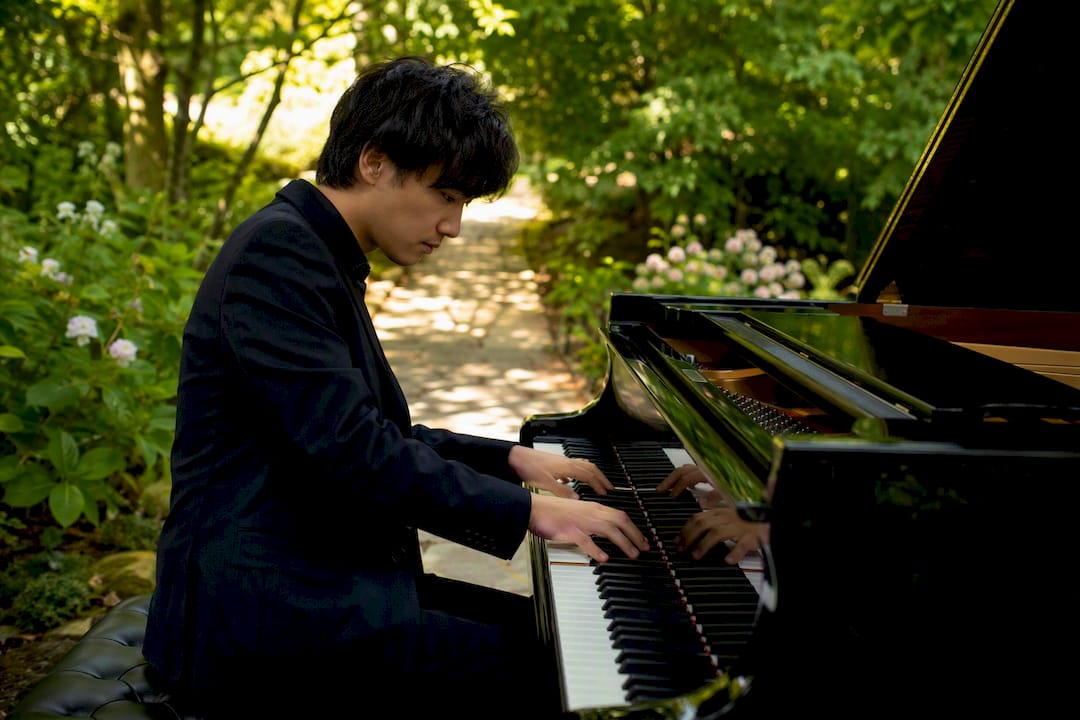
ABRSM Performance Grades are video-assessed exams awarding the same grade recognition as Practical Grades, but judged solely on how you play, not on scales or sight-reading. Candidates work through Initial Grade and Grades 1–8, and examiners mark four pieces plus an overall performance from a submitted recording.
Before you book, here’s what actually matters:
Grades available: Initial Grade through to Grade 8, across most instruments and singing.
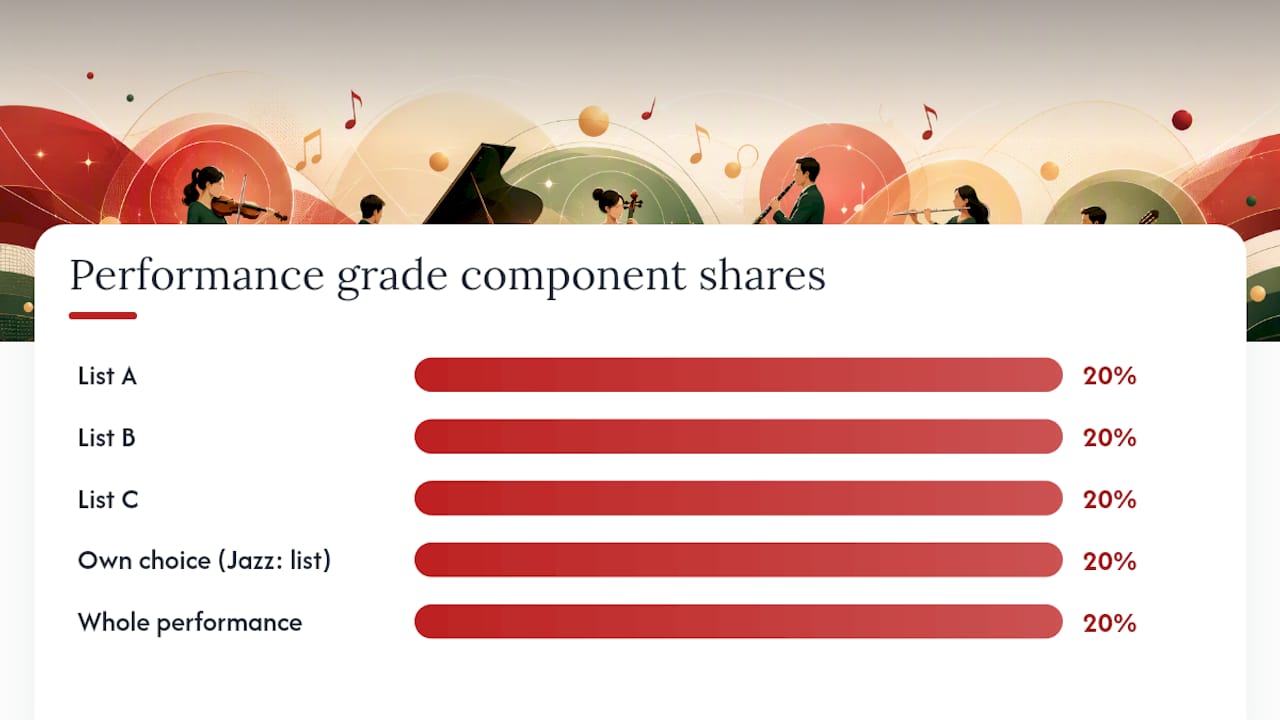
Assessment method: three set pieces from syllabus lists A, B and C, one own-choice piece, plus a mark for the performance as a whole.
Practical fact: booking is flexible, and you submit your video at booking or within 28 days after.
For the full repertoire lists and technical rules, the qualification specification is the document to open first.
Key Takeaways
ABRSM Performance Grades succeed through rigorous video-submission rules, a transparent 150-mark structure, and flexible booking that rewards careful rehearsal over exam-day luck.
Point | Details |
Format is video-only | Submit one continuous, unedited recording within 28 days of booking. |
Four pieces, 150 marks | Three set pieces, one own-choice, plus a 30-mark performance-as-a-whole judgement. |
Grades 6–8 need prerequisites | Grade 5 theory, Practical Musicianship, or Jazz Practical Grade, plus visible photo ID on camera. |
Repertoire rules shape programming | At least one piece per list, a two-piece cap per composer, and syllabus minimum/maximum timings. |
Danpianostudio supports preparation | Home and online lessons in London include mock recordings and repertoire programming for exam day. |
Table of Contents
Who ABRSM performance grades actually suit
Performance Grades exist as a deliberate alternative to Practical Grades, not a watered-down version of them. Where a Practical Grade tests scales, sight-reading and aural skills alongside repertoire, a Performance Grade strips all of that away and marks you purely on interpretation, communication and the shape of a live-feeling performance. That single change reshapes who the qualification suits.
Availability varies slightly by instrument. Piano, bowed strings and drum kit offer Initial Grade; most instruments and singing run Grades 1 through 8, and recent syllabus updates have added jazz and woodwind options that widen the pathway further. This matters most at the top end: Grades 6–8 sit as RQF Level 3 certificates and can carry UCAS points, which makes them genuinely useful for sixth-formers building a UCAS application around music.
Industry commentary has framed the format well: it lets learners play to their strengths rather than be marked down by a weaker aural test. If you’re strong at the instrument but slower with theory, this route rewards what you’re actually good at.
Pro Tip: If a student struggles with sight-reading but plays beautifully once they have learned the piece, Performance Grades can provide a picture of their actual performance ability rather than their sight-reading.
No supporting tests (scales, sight-reading, aural) for Initial through Grade 5.
Grades 6–8 require a Grade 5 theory-equivalent qualification, covered in the next section.
Suits performers preparing for auditions, recitals or simply building confidence on stage.
What’s actually in an ABRSM performance grade exam?
Every Performance Grade asks for four pieces and a fifth judgement covering the performance as a whole. Three pieces must come from the syllabus lists, A, B and C, and the fourth is your own choice, subject to the syllabus’s own-choice rules. Jazz syllabuses work slightly differently, with all pieces typically drawn from the syllabus lists rather than one being freely chosen.
Timing rules matter more than most candidates expect. Each grade sets both a minimum programme time and a maximum, and pieces below the syllabus’s stated minimum duration for that grade generally won’t be accepted. Run under the floor or over the ceiling and you risk a mark deduction before the examiner has judged a single note.
Marking follows a clean, transparent structure, set out in full in the qualification specification:
Result bands run through Distinction, Merit, and Pass categories, with passing marks beginning from a suitable pass threshold.
Check your syllabus’s exact minimum piece duration before finalising a programme.
The “performance as a whole” mark rewards flow between pieces, not just individual accuracy.
All five components carry equal weight, so a weak own-choice piece can cost as much as a weak set piece.
Do you need any qualifications to enter?
Entry is refreshingly open at the lower grades. Initial Grade through Grade 5 has no prerequisites whatsoever, so a complete beginner can enter Grade 3 if their teacher judges them ready, with no theory certificate required first.
Grades 6–8 change that. You need Grade 5 (or an equivalent) in Music Theory, Practical Musicianship, or a Jazz Practical Grade before ABRSM will process entry. If your certificate predates the digital records system, specifically anything from before 1994, you’ll need to upload a scanned copy yourself, since ABRSM’s own database won’t have it on file.
There’s one more procedural point that trips people up: candidates entering Grades 6–8 must show photo ID to the camera at the very start of their recording, before playing a note. Skip it, and the submission can be queried or rejected outright.
Initial–5: no entry requirements, no prior certificates needed.
6–8: Grade 5 theory, Practical Musicianship, or Jazz Practical Grade required first.
Missing pre-1994 certificates need a scanned copy uploaded at entry.
Grades 6 to 8 sit as RQF Level 3 qualifications, which is why ABRSM insists on verified prerequisites before entry, unlike the open-door lower grades.
How does booking and video submission work?
Performance Grades drop the fixed exam-session model entirely. There’s no waiting for a specific date months away; you book when you’re ready, and you can submit your video immediately or any time within 28 days of booking. That flexibility is genuinely useful for candidates whose readiness doesn’t line up neatly with a term calendar.
The technical rules are stricter than people expect. Your submission must be a single, continuous, unedited video file, but ABRSM’s own guidance clarifies that short, natural pauses between pieces are fine, provided the recording is never stopped, edited, or spliced together from multiple takes.
Book your grade through your ABRSM account once repertoire is confirmed and rehearsed.
Set up your camera to frame the full instrument, keyboard and hands (or your body for singing/wind).
Record candidate announcement and ID clip first (Grades 6–8), then play straight through.
Check audio isn’t clipping and the whole performance stays in one continuous file.
Upload within the 28-day window, allowing time for a re-record if something goes wrong.
If you’re using recorded accompaniment, check copyright permissions before you record. Using a backing track without clearance can invalidate a submission entirely.
Pro Tip: Do at least one full, unedited practice recording a week before your real attempt. Most nerves on submission day come from not knowing how the camera and room actually sound, not from the music itself.
How is your performance actually marked?
Examiners work from detailed marking criteria that describe, grade by grade, what separates a Pass from a Merit from a Distinction. Each piece starts from a baseline and moves up or down based on stylistic accuracy, technical control, and how convincingly the performance communicates.
The total available is 150 marks, split across four pieces at 30 each and a 30-mark performance-as-a-whole component. That last mark is synoptic: it doesn’t reward any single piece but judges pacing, stagecraft and consistency across the whole recording, meaning a strong finish can partially offset a shaky opening piece.
Examiners tend to weight priorities differently as grades rise. At lower grades, security and pulse dominate; by Grade 6–8, projection, stylistic realisation and stamina across a longer programme carry more of the mark. Our marking scheme guide breaks this down further for candidates who want to see exactly where marks tend to be lost.
Distinction: 130–150 marks.
Merit: 120–129 marks.
Pass: 100–119 marks.
How should you choose and order your four pieces?
Repertoire selection is where preparation either clicks into place or falls apart. You must take at least one piece from each of lists A, B and C, and most syllabuses cap you at two pieces by the same composer across the whole programme, so leaning too heavily on a single composer you love can backfire.
The 2027–2028 piano syllabus introduces updated repertoire lists and, notably, piano music for one hand at higher grades, a genuinely useful option for candidates managing an injury or asymmetric technical strength.
Programme order matters as much as piece selection. Open with something that settles nerves and shows control early, save your technically hardest piece for the middle when concentration peaks, and use your own-choice piece to show off what the set list can’t. Contrast of key, tempo and mood between pieces reads well to examiners judging the performance as a whole.
Playing from memory isn’t required, and duets or recorded accompaniment are permitted under the instrument-specific rules, but check copyright on any backing track before recording.
Pro Tip: Practise your page turns as deliberately as you practise the notes. A fumbled turn breaks the “continuous performance” feel examiners are marking for, even if it doesn’t cost technical marks directly.
Preparing to a rehearsal discipline
Structured rehearsal methods used in other high-stakes exam contexts, such as the WonPrep method for standardised testing, share a common principle with music preparation: repeated, timed run-throughs under near-real conditions beat scattered practice every time.
What should you actually do in the weeks before recording?
Preparation checklists work best broken into phases, because the final week needs a different focus from the final month.
One month out: run the full programme start to finish at least twice weekly, timing it against the syllabus minimum and maximum.
Two weeks out: rehearse in the actual room and on the actual instrument you’ll record on, not just your usual practice space.
One week out: do a full unedited test recording, watch it back, and check camera framing, lighting and audio levels.
Recording day: warm up away from the camera, then record your candidate ID clip and full programme in one continuous take.
Camera placement should show your hands, the keyboard and enough of your posture that an examiner can judge technique, not just hear sound. A tablet on a stable stand, angled slightly above keyboard height, usually beats a phone propped against books. Keep the background plain and the lighting even, since shadows across the hands can obscure fingering an examiner might otherwise credit.
Teachers and accompanists play a real role here too: a second pair of ears during the trial recording often catches balance issues a candidate can’t hear from the piano stool. Our preparation guide covers practice scheduling in more depth.
Pro Tip: Record your mock a week early, not the night before. That gives you time to fix a bad camera angle or noisy room without touching your actual submission window.
When performance grades are worth choosing
Performance Grades earn their place when a student is performance-ready but not yet confident across scales, sight-reading and aural work, or when someone is building an audition-style programme rather than a broad technical portfolio. Getting the format right from the start, with proper mock recordings and a rehearsed programme, tends to matter more to the final mark than raw talent alone.
How Danpianostudio Gets You Ready for Recording Day
Preparing a Performance Grade well means rehearsing the whole programme as one continuous piece of theatre, not five separate exercises, and getting comfortable with a camera watching you do it. Danpianostudio runs mock recording sessions in Central London, Camden and King’s Cross, and online, so you can rehearse under real exam conditions before the ones that count.
Lessons cover programme planning across lists A, B and C, repertoire pacing, and camera and audio checks so your submission meets ABRSM’s technical rules the first time. Whether you’d rather prepare in person or from home, both home piano lessons and online piano lessons include exam-focused coaching built around your chosen grade. If you’re weighing up your next grade, our guide to ABRSM preparation courses explains what a structured course looks like. Book a trial lesson to talk through your programme and recording plan before you commit to a booking date.
Sources
Recommended


Comments