


ABRSM exam fees 2026: what candidates need to know
- Dan Piano Studio
- Aug 4
- 13 min read


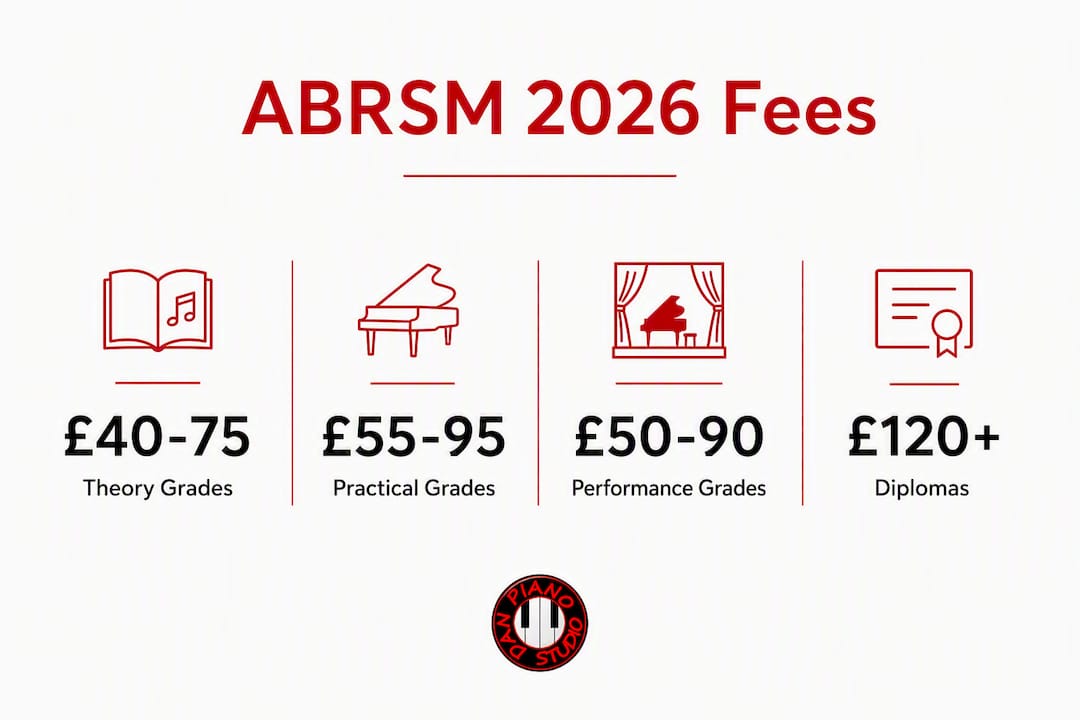
For 2026, ABRSM Practical Grade fees for UK candidates start from a fee for the Prep Test and increase for higher grades, with Grade 6 and above at a notably higher price range, with Music Theory, Performance Grades, and Diplomas each carrying their own fee bands. The definitive source for exact, grade-specific figures and current booking windows is the ABRSM Dates & fees page, which is updated whenever fees or session schedules change.
Before you book anything: confirm the exact fee for your specific grade and format on the ABRSM portal, check which booking period is open, and note your nearest local contact or exam centre. Fees shown in this guide reflect published 2026 figures but always verify the live page before payment.
Key actions to take right now:
Visit ABRSM Dates & fees to see open booking periods and session dates for your region.
Identify whether your exam is face-to-face or digital, as format affects both fee and preparation requirements.
Note your local ABRSM representative or centre contact, especially if you are outside England.
Check whether a digital certificate (included as standard) is sufficient, or whether you need a paper certificate for a portfolio or application.
Table of Contents
How do Practical Grade fees and face-to-face sessions work in 2026?
Performance Grades and ARSM: fees, digital options and how to book
Music Theory Grades 1–8: online vs paper, fees and blackout dates
Diplomas, Prep Test and Open Music Assessment: 2026 fees and formats
How do you find booking windows, session dates and local contacts?
Danpianostudio’s preparation and booking tips for 2026 exams
Danpianostudio’s ABRSM preparation lessons in London and online
What are the 2026 ABRSM exam fees by category?
The table below gives a working overview of 2026 ABRSM fee ranges for UK candidates. Confirm the precise figure for your grade on the official ABRSM page before booking.
Exam category | Grade / level | Indicative UK fee range |
Practical Grades | Prep Test / Initial | Confirm the exact fee for your grade on the ABRSM portal. |
Practical Grades | Grades 1–2 | Confirm the exact fee for your grade on the ABRSM portal. |
Practical Grades | Grades 3–5 | Confirm the exact fee for your grade on the ABRSM portal. |
Practical Grades | Grades 6–8 | Confirm the exact fee for your grade on the ABRSM portal. |
Jazz Practical Grades | Grades 1–5 | Confirm the exact fee for your grade on the ABRSM portal. |
Performance Grades | Grades 1–8 | Separate fee table; check ABRSM portal |
Music Theory | Grades 1–5 (online) | Lower band; check ABRSM portal |
Music Theory | Grades 6–8 | Higher band; check ABRSM portal |
ARSM | Diploma | Separate fee; digital and face-to-face variants |
LRSM / FRSM | Diploma | Higher fee; check ABRSM portal |
Prep Test | Non-graded | Confirm the exact fee on the ABRSM portal. |
Open Music Assessment | Non-graded | Check ABRSM portal |
A few points worth knowing before you look up your specific grade:
A digital certificate is included in every exam fee as standard. If you need a printed paper certificate, for example for a university application or portfolio, ABRSM charges a small supplementary fee.
Candidates sitting exams outside the UK should check their country-specific ABRSM page, as regional fees and booking arrangements can differ from the England figures above.
Fees are reviewed annually, so a figure that applied in 2025 may not carry over unchanged.
How do Practical Grade fees and face-to-face sessions work in 2026?
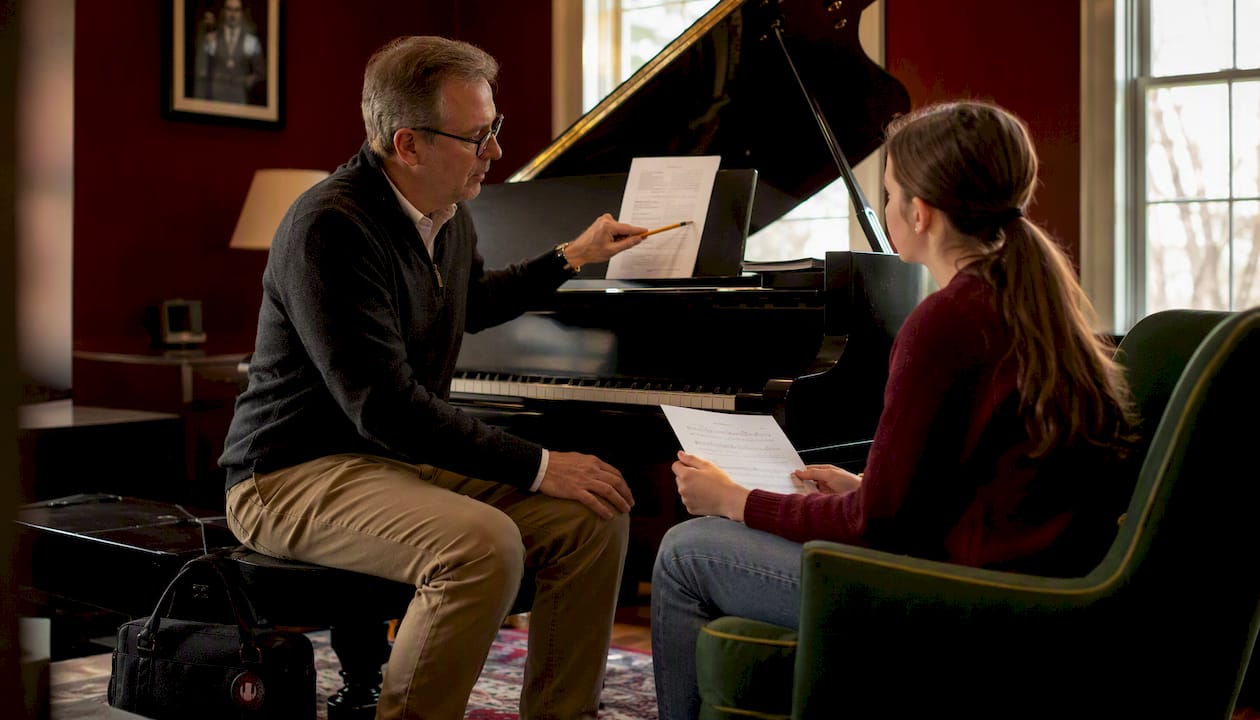
Practical Grades 1–8 remain the most widely taken ABRSM assessments, and they are all delivered face-to-face with a live examiner. The fee progression is straightforward: lower grades cost less, and fees step up meaningfully at Grades 3, 5, and 6. Based on published 2026 figures, the indicative UK fee band runs from a progression of fees increasing with grade level, starting at a lower fee at Grade 1 and rising through Grades 3–5, with the highest fees from Grade 6 onwards.
Grade | Indicative UK practical fee |
Prep Test / Initial | Confirm the exact fee on the ABRSM portal. |
Grade 1 | Confirm the exact fee on the ABRSM portal. |
Grade 2 | Confirm the exact fee on the ABRSM portal. |
Grade 3 | Confirm the exact fee on the ABRSM portal. |
Grade 4 | Confirm the exact fee on the ABRSM portal. |
Grade 5 | Confirm the exact fee on the ABRSM portal. |
Grade 6 | Confirm the exact fee on the ABRSM portal. |
Grades 7–8 | Confirm the exact fee on the ABRSM portal. |
The exam itself follows a standard format: a live examiner assesses three prepared pieces, scales and arpeggios, sight-reading, and aural tests. From Grade 5 upwards, candidates must also hold a pass in Music Theory Grade 5 (or an accepted equivalent) before sitting a higher Practical Grade.
Accompanist arrangements are the candidate’s own responsibility for most instruments. Pianists and guitarists do not need an accompanist, but string, wind, and brass players must arrange one independently unless their exam centre provides one as an add-on service.
Booking opens through the ABRSM portal during published booking periods. Sessions fill up, particularly in the spring and autumn windows, so log in as soon as your preferred period opens.
Check the ABRSM portal for session dates and venues in your area.
Confirm your accompanist’s availability before you commit to a session date.
For guidance on what the marking criteria actually reward, the ABRSM marking scheme guide on the Danpianostudio site breaks it down clearly.
Pro Tip: Book your accompanist at the same time as your exam slot, not after. Popular accompanists in London fill their diaries quickly once booking periods open, and a last-minute scramble before a Grade 6 or 7 exam is entirely avoidable.
Jazz Practical Grades: 2026 fees and what to check early
Jazz Practical Grades follow a similar fee band to standard Practical Grades at equivalent levels, but the booking logistics are different enough to catch candidates off guard.
Set lists draw from ABRSM’s Jazz syllabus, and the format allows for solo or small-ensemble performance depending on the grade
Check the Jazz visit list the moment booking opens. Venues in England outside London can have only one or two scheduled visits per year. If you miss the booking window for your nearest venue, the next available date may be months away or require significant travel.
Candidates preparing for Jazz grades benefit from working through the specific Jazz syllabus requirements early. The improvisation and lead-sheet components reward consistent practice over cramming, and a teacher familiar with the ABRSM Jazz syllabus will make a tangible difference to the result.
Performance Grades and ARSM: fees, digital options and how to book
Performance Grades 1–8 and the ARSM diploma occupy a distinct space in the ABRSM offer. They assess a longer programme of pieces without the scales, sight-reading, and aural components of Practical Grades, making them well suited to candidates who want to demonstrate musical depth and interpretive range.
ABRSM publishes separate fee tables for Performance Grades and ARSM, and these differ from Practical Grade fees. Digital submission is a core delivery option for Performance Grades, which changes both the preparation process and the booking workflow.
Assessment | Delivery format | Fee |
Performance Grades 1–8 | Digital video submission | Check ABRSM portal for grade-specific fee |
Performance Grades 1–8 | Face-to-face (where available) | Check ABRSM portal |
ARSM | Digital submission | Separate fee; check ABRSM portal |
ARSM | Pilot face-to-face | Check ABRSM portal for availability |
For digital submissions, ABRSM specifies technical requirements covering video quality, audio capture, file format, and maximum recording length. These specs are published on the ABRSM website and are worth reading well before the submission deadline, not the night before.
Key points for digital Performance Grade bookings:
Record in a quiet space with good natural or artificial lighting; the examiner needs to see hands and posture clearly.
Use a stable camera position rather than a handheld device; a phone on a tripod at the right angle is perfectly acceptable.
Check the file format and size limits ABRSM specifies before recording, as re-recording a full programme is time-consuming.
Booking for digital submissions follows the same portal process as face-to-face, but the submission deadline replaces a session date.
Music Theory Grades 1–8: online vs paper, fees and blackout dates
Music Theory exams are available in both online and paper formats, and the choice affects both the booking process and, in some cases, the fee. ABRSM publishes guidance on online versus paper delivery, including specific dates when the online system is unavailable due to scheduled maintenance or updates.
Grade band | Format | Notes |
Grades 1–5 | Online (on-demand) | Available most days; check blackout dates |
Grades 1–5 | Paper (set sessions) | Fewer sittings per year |
Grades 6–8 | Paper only | No online option at higher grades |
Fees for online Music Theory at Grades 1–5 tend to sit in a lower band than paper-session fees at the same grade, though the exact figures for 2026 should be confirmed on the ABRSM portal. Third-party guides such as Go Music Theory collate approximate fee ranges across grades, but always cross-check against the official ABRSM page since fees are reviewed annually and vary by jurisdiction.
Avoid booking online Music Theory on or around ABRSM system-update dates. ABRSM lists these blackout periods on the Dates & fees gateway. Booking during a blackout window can result in a failed transaction or a delayed confirmation, which is frustrating when you have a specific preparation timeline in mind.
For candidates preparing for Grades 6–8 theory, paper sittings are the only option, so the available session dates are more limited. Plan the preparation timeline backwards from the paper sitting date, not forwards from when lessons start. The Danpianostudio post on piano theory for exam success covers the preparation approach the studio uses for higher theory grades.
Diplomas, Prep Test and Open Music Assessment: 2026 fees and formats
Higher-level candidates and those just starting out sit at opposite ends of the ABRSM offer, but both groups need to understand their fee and format options before booking.
Assessment | Format | Fee |
ARSM | Digital / pilot face-to-face | Check the ABRSM portal for the exact fee. |
LRSM | Digital / face-to-face | Check the ABRSM portal for the exact fee. |
FRSM | Face-to-face | Check the ABRSM portal for the exact fee. |
Prep Test | Face-to-face | Check the ABRSM portal for the exact fee. |
Open Music Assessment | Face-to-face | Check the ABRSM portal for the exact fee. |
A few format-specific points worth noting:
The Prep Test is a non-graded, supportive assessment designed for younger or newer candidates. There is no pass or fail; the examiner provides written feedback. At approximately a starting fee for the exam, it is a low-risk way to experience an exam environment.
The Open Music Assessment is similarly non-graded and flexible in repertoire choice, making it useful for adult returners or candidates working outside the standard syllabus.
For ARSM and above, digital submission and pilot face-to-face options carry separate fees. The digital route tends to be more accessible logistically, but check whether your preferred diploma level offers it.
Paper certificates for diplomas follow the same rule as graded exams: the digital certificate is included, and a paper version costs extra.
How do you find booking windows, session dates and local contacts?
Booking periods and session availability are managed through the ABRSM Dates & fees portal. The portal lists open booking periods, available session dates by region, and local representative contact details for candidates outside England or in areas served by a local centre.
Go to the ABRSM Dates & fees page and select your country or region
Session dates in popular exam windows fill quickly. The spring and autumn practical exam periods in England attract high demand, particularly at well-connected venues in London and other major cities. Log in on the first day a booking period opens if you have a strong preference for venue or date.
For candidates in England, most bookings are handled directly through the ABRSM portal without needing to contact a local representative. Outside England, and particularly for candidates using a local ABRSM centre or agent, the local contact page is the right first stop for any centre-specific questions about venue, timing, or payment.
What are the refund, rescheduling and administrative fees?
ABRSM exam fees are generally non-refundable once a booking is confirmed. This is the single most important financial fact to understand before you pay. Narrow exceptions exist, but candidates should treat the fee as committed at the point of booking.
Administrative charges candidates may encounter include:
External review fee: — ABRSM publishes a charge for candidates who request an external review of their result. The exact figure is listed on the ABRSM fees page.
Fees are non-refundable in most circumstances. Confirm your exam date, format, and preparation readiness before completing payment. If there is any doubt about a candidate’s readiness, booking a later session is almost always cheaper than losing the fee.
Candidates paying from outside the UK should be aware that ABRSM processes payments as international transactions. Banks, card issuers, and PayPal may apply currency conversion or processing fees on top of the ABRSM exam fee itself. These charges come from the payer’s bank, not from ABRSM, so check with your bank before paying.
How to book an ABRSM exam: step-by-step
The ABRSM How to book guidance sets out the full process and makes clear that the applicant is responsible for meeting all format-specific requirements before and during the exam.
Create or log in to your ABRSM account at abrsm.org.
Select your exam type, grade, and format (face-to-face or digital).
Check the open booking period for your region and the available session dates.
Select a session that gives you enough preparation time; avoid booking a date that is too close to your current lesson schedule.
Complete the booking form, including candidate details and, for digital exams, confirmation that you can meet the technical requirements.
Pay the exam fee by the method accepted in your region; save the confirmation email and reference number.
Arrange any accompanist for face-to-face practical exams immediately after booking, not as an afterthought.
For digital submissions, read the technical specification document on the ABRSM site and do a test recording well before the submission deadline.
Candidate responsibilities under ABRSM’s guidance include:
Meeting age and consent requirements where applicable.
Arranging a suitable accompanist for live practical exams (instruments other than piano and guitar).
Ensuring the recording environment and equipment meet ABRSM’s digital submission specs.
Submitting digital files by the published deadline.
Pro Tip: Book your exam session first, then schedule your lessons backwards from that date. Danpianostudio recommends this approach because it creates a concrete deadline that sharpens focus and makes mock-exam timing more realistic.
For a broader view of how ABRSM compares to other boards before you commit, the Danpianostudio post on ABRSM vs Trinity is worth reading.
Danpianostudio’s preparation and booking tips for 2026 exams
Getting the booking right is only half the work. The preparation that follows determines the result, and a few practical habits make a measurable difference.
Studio checklist for ABRSM 2026 preparation:
Timetable lessons to cover all three set pieces, scales, sight-reading, and aural well before the exam date, not in the final two weeks.
Schedule at least one full mock exam under realistic conditions, including timing and the accompanist if relevant.
For digital Performance Grade submissions, do a full test recording at least three weeks before the deadline to catch any audio or lighting issues early.
Check the ABRSM syllabus document for your grade and instrument; requirements do occasionally change between editions.
Confirm the exam booking reference and session details a week before the exam date.
For video submissions specifically:
Position the camera so both hands and the keyboard are visible throughout.
Record in a room with minimal background noise; close windows and switch off fans or air conditioning if possible.
Name your files exactly as ABRSM specifies in the submission guidance; incorrect file names can delay processing.
Upload well before the deadline to allow time to resolve any technical issues.
Pro Tip: Danpianostudio recommends using the ABRSM exam preparation checklist alongside your lesson schedule. Ticking off each element systematically removes the last-minute uncertainty that costs candidates marks in sight-reading and aural.
The studio’s ABRSM preparation guide covers the full preparation arc from initial booking to the day itself.
Key takeaways
ABRSM 2026 Practical Grade fees for UK candidates vary by grade, with the exact fee for each level published on the official ABRSM portal; this also applies to Music Theory, Performance Grades, and Diplomas, each of which has a separate fee table to confirm before booking.
Point | Details |
Confirm fees on the official page | Always check the ABRSM Dates & fees page for your exact grade and format before paying. |
Digital certificate is standard | A paper certificate costs extra; only request one if you genuinely need it for an application. |
Fees are non-refundable | Treat the fee as committed at booking; confirm readiness and session date before paying. |
Book early in each window | Spring and autumn practical sessions in England fill quickly; log in on the first day a period opens. |
Danpianostudio supports preparation | The studio offers one-to-one lessons, mock exams, and digital submission coaching for ABRSM candidates in London and online. |
A note on ABRSM preparation from experience
The candidates who struggle most with ABRSM exams are rarely the ones who lack ability. They are the ones who booked too late, chose a session date that left no room for a mock exam, or discovered the digital submission requirements the week before the deadline.
The fee structure itself is transparent once you know where to look. What catches people out is the assumption that booking is straightforward and preparation will sort itself out. It does not. A Grade 5 candidate who books a session in March and then starts serious preparation in February will almost always underperform relative to their actual level.
The practical advice in this guide reflects what actually works: book the exam first, build the preparation plan around that date, run at least one mock under real conditions, and for digital submissions, treat the technical setup as a separate task that needs its own rehearsal. None of this is complicated, but it requires doing it in the right order.
Danpianostudio’s ABRSM preparation lessons in London and online
Knowing the 2026 ABRSM fee schedule is the starting point. Getting the result that justifies the fee is where Danpianostudio comes in.
The studio offers one-to-one ABRSM preparation lessons covering all Practical Grades, Performance Grades, and Music Theory from Grade 1 through to diploma level. Lessons are available in person in Central London (Camden and King’s Cross) and online, so candidates across England can access the same structured preparation regardless of location. The studio’s approach builds set pieces, scales, sight-reading, and aural into a single coherent timeline tied to your booked exam date, with mock exams scheduled close to the real sitting.
For candidates preparing digital Performance Grade submissions, the studio provides specific coaching on recording technique, file preparation, and submission workflow so that technical issues do not undermine a strong performance.
To start a tailored ABRSM preparation plan, book an in-person lesson in London or an online lesson through the studio’s booking page. Places fill ahead of each exam window, so the earlier you enquire, the better your choice of lesson times.
Official sources and further reading
ABRSM Dates & fees 2026 — the primary source for grade-by-grade fees, booking periods, and session dates for all exam types.
ABRSM Dates & fees portal — booking period listings, regional session availability, local contact pages, and online Theory blackout dates.
ABRSM How to book — official step-by-step booking guidance and candidate responsibilities.
ABRSM Face-to-face exams guidance — specific requirements for live practical exam sessions including accompanist arrangements.
Go Music Theory: ABRSM theory exam fees breakdown — a useful secondary reference collating approximate Music Theory fee ranges across grades; always cross-check against the official ABRSM page.
Recommended


Comments